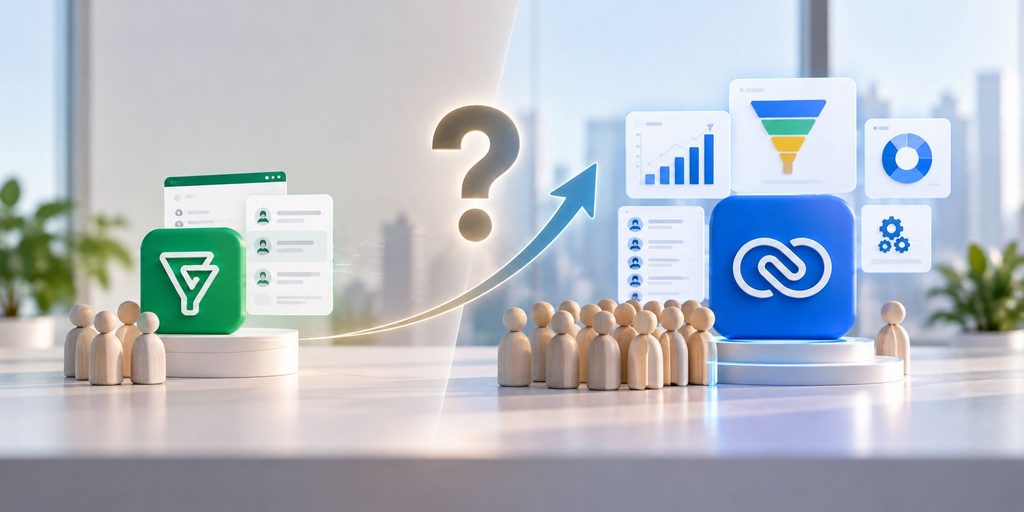









Customer data loss is no longer a rare incident. It has become one of the biggest risks facing many businesses, especially when the entire sales consultation and customer nurturing process takes place through Sales representatives’ personal Zalo accounts. While this approach may be convenient during the early stages of business growth, it creates significant challenges as the customer base expands. Organizations eventually face issues related to data ownership, process control, and business continuity.
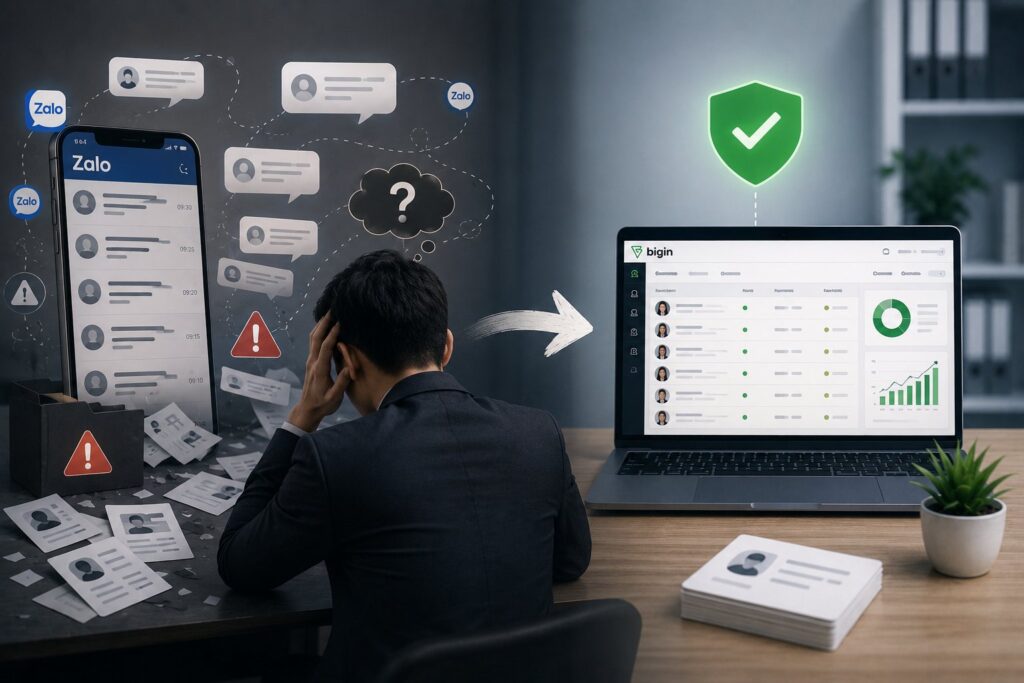
Customer Data Loss Often Begins with a Very Familiar Habit
Today, many businesses still allow their Sales teams to communicate with customers through personal Zalo accounts. This approach is easy to implement, convenient for communication, and aligns with the habits of both employees and customers.
However, the issue is not the use of Zalo itself. The real challenge lies in how businesses manage the customer data generated through those conversations.
Customer information, consultation history, quotations, requirements, feedback, and the entire customer relationship gradually become stored in each employee’s personal account instead of belonging to the business. When employees leave the company or move to another role, organizations suddenly realize that customer data loss means much more than losing a contact list. It means losing months or even years of valuable customer relationship history.
What Does a Business Really Lose When a Sales Representative Leaves?
Many businesses view employee turnover simply as the need to recruit a replacement. In reality, the greatest loss is often the information that can no longer be recovered.
Customers may have gone through multiple consultation sessions, but the business no longer knows which products they were interested in, whether they already received a quotation, or which stage of the buying journey they had reached. New Sales representatives must start almost from scratch, while customers may feel that they are not remembered or are forced to repeat information they have already shared.
Beyond disrupting the customer experience, the business also loses the ability to evaluate the effectiveness of its Sales process because the entire work history is no longer available.
This is exactly why many organizations experience customer data loss even though they still have customers’ phone numbers or Zalo accounts.
The Risk Is Not Just About Data, but About Business Governance
When every Sales representative manages customers in their own way, it becomes extremely difficult for the business to gain a complete view of its operations.
Management cannot determine how many customers each Sales representative is handling, the conversion rates at different stages, or which customers have not been contacted for an extended period. Handover between employees also becomes difficult because there is no centralized source of information to continue the customer relationship.
As a result, business operations become heavily dependent on individual employees instead of standardized organizational processes.
Over the long term, this creates significant risks for businesses planning to expand their Sales teams or open additional branches.
Centralized Management Is the Real Solution to Customer Data Loss
Many organizations assume that the solution is to stop using Zalo altogether. However, this is not the right approach.
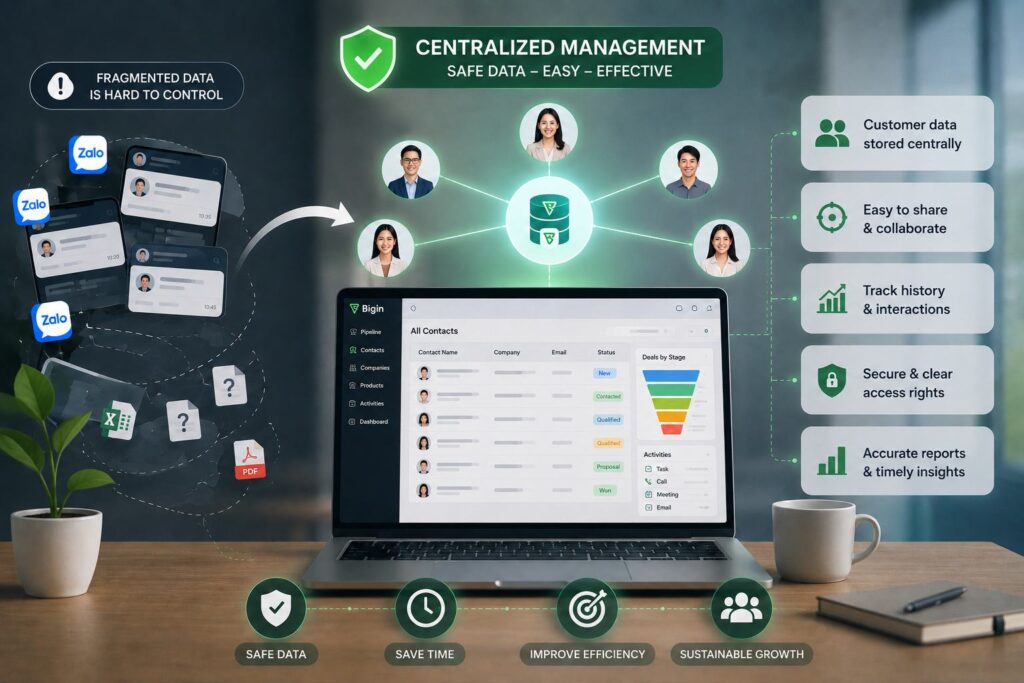
Zalo remains one of the most effective communication channels for customers in Vietnam. What businesses need to change is not the communication tool itself, but the way customer information is stored and managed.
A CRM system allows all customer information to be managed centrally on a single platform. Every consultation, phone call, email, appointment, and note is stored within the customer’s profile instead of remaining only on an individual employee’s device.
As a result, even if the assigned Sales representative changes, the business retains the complete interaction history and can continue serving the customer without disrupting the customer experience.
How Does CRM Help Businesses Control Customer Data?
In addition to reducing the risk of customer data loss, CRM enables businesses to establish a more transparent governance process.
Customer information is managed through role-based permissions rather than being stored individually by each employee. Managers can monitor follow-up progress, interaction history, and the performance of every Sales representative within a single system.
When customers are transferred between employees or departments, all historical information remains intact. This not only improves the customer experience but also ensures that customer data remains an organizational asset.
More importantly, centralized data creates the foundation for reporting, business performance analysis, and data-driven decision making instead of relying on assumptions or intuition.
Signs That Your Business Should Implement a CRM Immediately
NếIf your business is experiencing one or more of the following situations, now may be the right time to build a centralized customer data management system:
- Your Sales team primarily communicates with customers through personal Zalo accounts.
- Customer interaction history is not stored in a centralized system.
- Customer handovers become difficult whenever employees leave.
- Managers cannot monitor the follow-up progress of individual Sales representatives.
- Customers are repeatedly asked to provide the same information when a new Sales representative takes over.
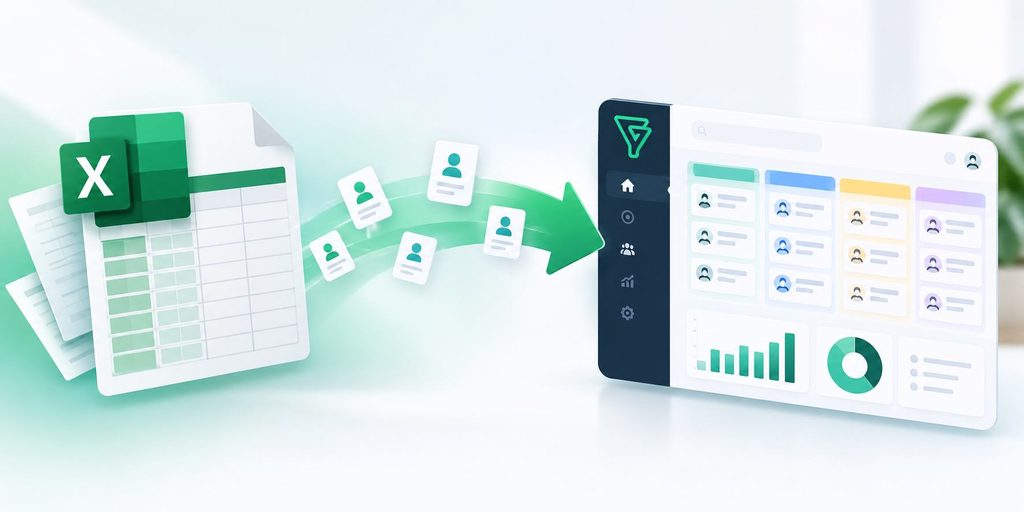
- Customer data is scattered across multiple Excel files or different devices.
These are all warning signs that your business is at significant risk of customer data loss if an appropriate management system is not implemented.
Customer Data Should Belong to the Business, Not to Individuals
Customers are one of a business’s most valuable assets. However, their true value lies not only in their contact information but also in the complete history of interactions, preferences, behaviors, and relationships built over time.
When customer data is managed centrally, businesses can maintain consistent customer service even when staff changes occur while also creating a strong foundation for sustainable growth.
Conversely, if customer information continues to depend on personal Zalo accounts or individual Sales representatives’ devices, the risk of customer data loss will always remain and can directly impact both revenue and the company’s reputation.
Customer data loss is not simply a Sales department issue. It is a governance challenge that businesses should address as early as possible. Rather than relying on personal Zalo accounts or scattered storage tools, organizations should implement a CRM system that centralizes customer data, standardizes customer care processes, and ensures that ownership of business information always remains with the organization.

At WBL Group, we work alongside businesses to evaluate existing processes, design customer data management architectures, and implement CRM solutions tailored to their operational scale. Our goal is not simply to deploy technology, but to help organizations protect their data assets, reduce operational risks when staff changes occur, and establish a solid foundation for sustainable long-term growth.