








CRM for businesses is one of the most important platforms in the digital transformation journey. It helps companies manage customer data, track sales opportunities, optimize sales processes, and connect Marketing, Sales, and Customer Service activities within one centralized system.
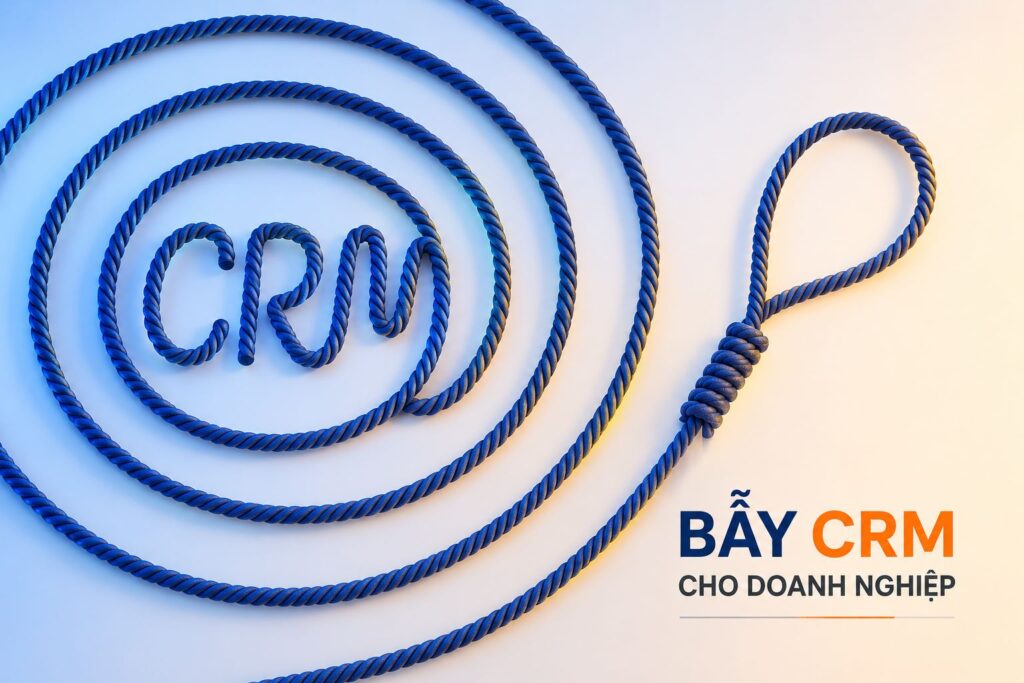
However, in reality, many CRM projects do not deliver the expected results. Companies invest in software, implementation, training, and operations, but user adoption remains low, data is not updated properly, or employees return to using Excel after only a short period of time.
In most cases, the problem is not the software itself.
The real issue often comes from choosing a CRM based on personal preference, brand reputation, or market trends instead of evaluating the company’s actual operational needs.
Through our experience consulting and implementing systems for SMEs, WBL Consulting Group has identified five common CRM selection mistakes that businesses should carefully avoid before making an investment.
1. Choosing the Right CRM for Businesses Based on Needs, Not Brand Reputation
One of the most common mistakes is choosing a CRM simply because the platform is well-known.
Many businesses assume that if a CRM is used by large corporations, it must also be the best choice for them. However, the operating scale, business processes, and internal resources of an SME are very different from those of a large enterprise.
A powerful CRM system with hundreds of features may not create real value if the business only needs to manage customer information, sales opportunities, and basic after-sales support.
The most important question is not which CRM is the most famous.
The real question is which CRM can solve the company’s actual operational problems.
Before evaluating CRM vendors, businesses should first clarify their current challenges:
- How is customer data currently being managed?
- Where are the bottlenecks in the sales process?
- What tools does the sales team need to work more effectively?
When the business understands its real needs, choosing the right CRM becomes much easier and more accurate.
2. CRM for Businesses: Looking Beyond Software Cost
Many companies evaluate CRM based mainly on monthly or annual license fees.
However, software cost is only one part of the Total Cost of Ownership, also known as TCO.
When implementing CRM, businesses also need to consider:
- Initial implementation cost
- User training cost
- Process customization cost
- Maintenance and support cost
- Future upgrade and expansion cost
A CRM with a low license fee may still become expensive in the long run if it requires significant operational resources, is difficult to customize, or cannot scale with the business.
On the other hand, a CRM with a higher initial cost may deliver better return on investment if it is easier to use, faster to implement, and better aligned with the company’s real needs.
3. CRM for Businesses Should Support Processes, Not Just Featuresiness Processes
When evaluating CRM systems, many businesses start with a long list of desired features.
They want the system to include customer management, marketing automation, customer support, advanced analytics, reporting, and many other functions.
However, CRM is not a competition of feature quantity.
A system with hundreds of features can still fail if it does not support the company’s actual business processes.
The real value of CRM lies in its ability to support and optimize operations.
If the sales and customer service processes are not standardized, adding more features will only make the system more complex, harder to use, and less likely to be adopted by employees.
Businesses should start with the process first.
Only after that should they choose the right technology to support that process.
4. Why Scalability Matters When Choosing CRM for Businessesg CRM Scalability
A company’s current needs may be very different from its needs in the next three to five years.
A business with 10 salespeople today may grow to 50 or 100 in the future. The number of customers, branches, products, and internal processes may also increase over time.
That is why CRM should not only meet current requirements. It also needs to support future growth.
If a business chooses a system that is too limited, it may need to switch to another platform after only a few years.
This can create many risks, including:
- Data loss
- Operational disruption
- Reimplementation cost
- Employee retraining cost
- Negative impact on customer experience
Scalability should be evaluated from the very beginning of the CRM selection process.
5. CRM for Businesses Must Integrate with Your Existing Systems
Today, CRM is no longer a standalone system.
In a digital business environment, customer data often comes from many sources, such as websites, Facebook Lead Ads, email marketing platforms, call centers, ERP systems, helpdesk software, and e-commerce platforms.
If CRM cannot integrate with other systems, the business will continue to face fragmented data and manual data entry.
This reduces productivity and affects the management team’s ability to make accurate decisions.
An effective CRM system should be able to connect data across departments and technology platforms.
This is also the foundation for building an integrated operating ecosystem and centralized data management model.
CRM Evaluation Checklist Before Investing
Before investing in any CRM system, businesses should answer the following questions:
✅ What business problem are we trying to solve?
✅ Has our current sales process been standardized?
✅ How many users will use the CRM?
✅ Where is our data currently stored?
✅ Which systems does the CRM need to integrate with?
✅ Can the CRM support our growth plan in the next three to five years?
✅ Is the system easy for users to learn and adopt?
✅ What is the total cost of ownership after three years?
✅ Does the vendor have the capability to support implementation and long-term development?
Why Choosing the Right CRM for Businesses Matters
Choosing a CRM is not simply about selecting customer management software. It is a strategic decision that directly affects how a business collects data, operates sales processes, coordinates between departments, and builds long-term customer experience.
Many CRM projects fail not because the technology is not good enough, but because the business has not clearly defined its needs before investing.
The right CRM system should solve current operational problems while also supporting the company’s next stages of growth.
At WBL Consulting Group, we believe that digital transformation does not begin with buying new software. It begins with understanding the business operating model, standardizing processes, and selecting the right technology to support long-term growth.
CRM only creates real value when it becomes the central data hub connecting Marketing, Sales, Customer Service, and other operational systems across the business.
When data is connected properly, businesses can manage customers more effectively, make faster and more accurate decisions, and create sustainable growth.