








Digital transformation is no longer a journey reserved for large educational institutions. With the advancement of technology, schools, language centers, skills training centers, and other educational organizations can now begin with solutions that match their size and budget. In this context, a Mini CRM for Education has become a practical choice for SMEs to build a strong data management foundation, optimize operational processes, and improve efficiency without requiring a significant investment from the very beginning.
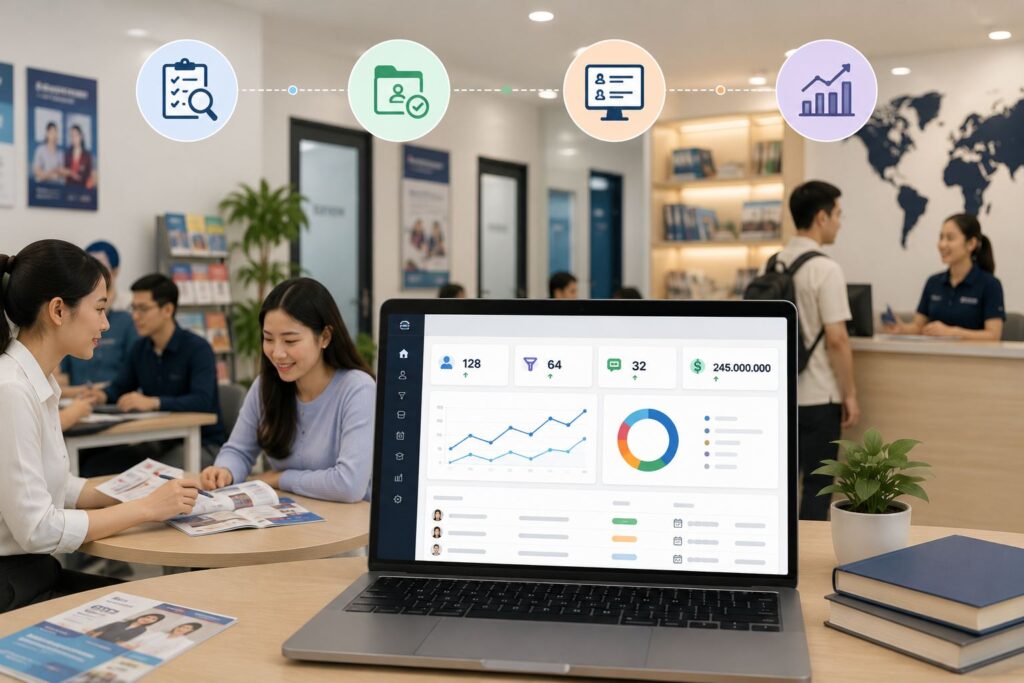
Mini CRM for Education: Why Should SMEs Avoid Starting with an Overly Complex System?
When exploring digital transformation, many educational organizations assume that implementing a CRM requires investing in a large-scale system with extensive features and a budget of hundreds of millions of Vietnamese dong. As a result, many institutions continue managing their operations with Excel, Google Sheets, or familiar messaging tools because they believe a CRM system is beyond their budget.
In reality, the biggest challenge for education SMEs is not the lack of a complex system. It is the absence of a solution that is suitable for managing daily data and operational processes. As the number of students grows, information becomes scattered across multiple staff members, consultation appointments are missed, and post-enrollment follow-up is handled inconsistently. Over time, organizations begin losing valuable growth opportunities, often without realizing it.
Digital transformation is not about choosing the software with the largest number of features. More importantly, it is about selecting a solution that fits the organization’s current scale, solves existing operational challenges, and can grow alongside the business.
What Challenges Does a Mini CRM for Education Solve?
For most education SMEs, daily operations typically revolve around four core activities: capturing prospective students, managing admissions consultations, maintaining student information, and providing post-enrollment support.
When these activities are managed across multiple files or depend on individual staff members, it becomes difficult to monitor admissions performance and evaluate the quality of student services.
A Mini CRM for Education helps organizations gradually standardize their operations by enabling them to:
- Manage student and parent information through a centralized system.
- Track the entire journey from prospective student to enrollment.
- Record consultation history to ensure no prospective student is overlooked.
- Assign tasks and schedule follow-up activities across departments.
- Consolidate data so managers can evaluate admissions performance at every stage.
Instead of relying on personal memory or disconnected spreadsheets, all data is stored in one centralized system, making collaboration between admissions, enrollment, and student services more consistent.
A Mini CRM for Education Implementation Roadmap for SMEs
Not every organization needs to implement a CRM in the same way. For education SMEs, dividing digital transformation into manageable phases reduces implementation pressure while increasing user adoption.
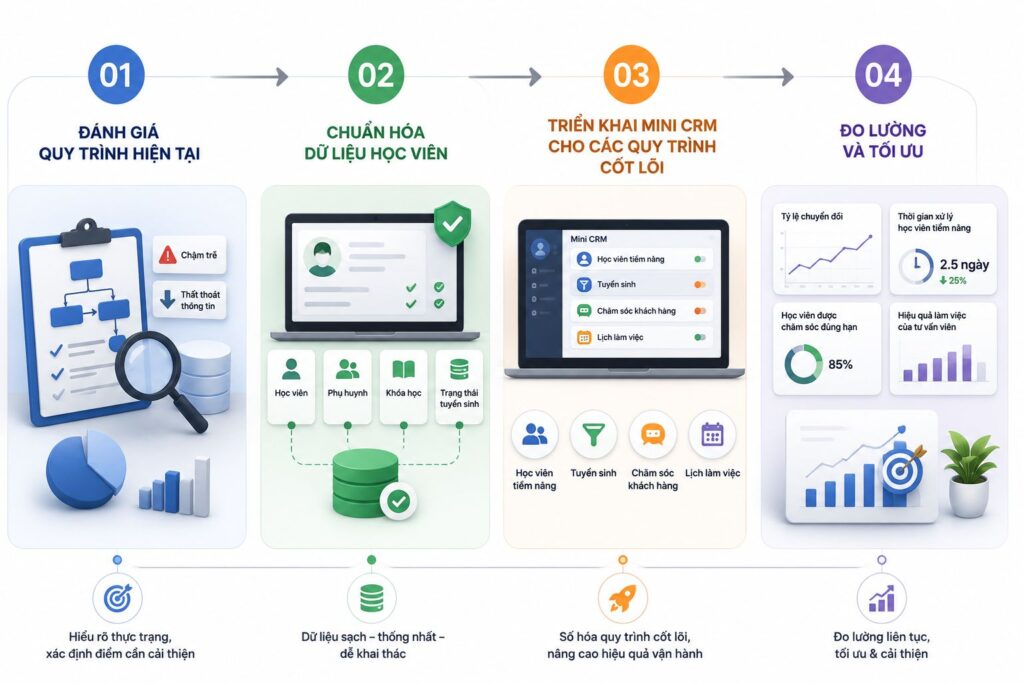
Step 1: Evaluate Your Current Processes
Organizations should first identify where their data is currently stored, how the admissions process operates, and which areas frequently cause delays or information loss.
Step 2: Standardize Student Data
Before migrating data into the system, organizations should establish consistent standards for storing student information, parent information, course details, and admissions status to avoid duplicate or inconsistent records.
Step 3: Implement a Mini CRM for Core Processes
During the initial phase, organizations should focus on digitizing the processes that deliver the greatest business value, such as managing prospective students, tracking admissions, providing student support, and scheduling daily activities.
Step 4: Measure and Optimize
After using the system for a period of time, organizations can monitor key metrics such as admissions conversion rates, lead response times, the number of students receiving on-time follow-up, and the performance of each admissions team in order to continuously improve their processes.
A phased implementation approach helps teams adapt more easily than introducing multiple features all at once within a short period.
The Effectiveness of a Mini CRM for Education Is Not Determined by the Number of Features
A common misconception is that the more features a CRM has, the better it is. In reality, however, the value of a CRM is not determined by the number of modules it offers, but by how effectively an organization can use it every day.
For education SMEs, a simple system that the entire team uses consistently delivers far greater value than a complex platform where only a small portion of the features is actually utilized.
When student data is managed centrally, admissions processes are standardized, and daily activities are tracked transparently, organizations not only reduce the risk of losing prospective students but also establish a strong foundation for future growth. This also marks an important shift from operating based on individual experience to managing the organization through data.
When Should an Organization Upgrade from a Mini CRM?
A Mini CRM for Education is suitable for most education SMEs during the early stages of digital transformation. However, as the organization grows with multiple campuses, additional departments, or the need to integrate more deeply with financial, accounting, marketing, or learning management systems, it may be time to consider upgrading to a more comprehensive CRM platform.
The key is to ensure that the upgrade is built on standardized data and well-defined business processes. When this foundation is already in place, organizations do not need to start over. Instead, they can continue expanding on the system they have already established.
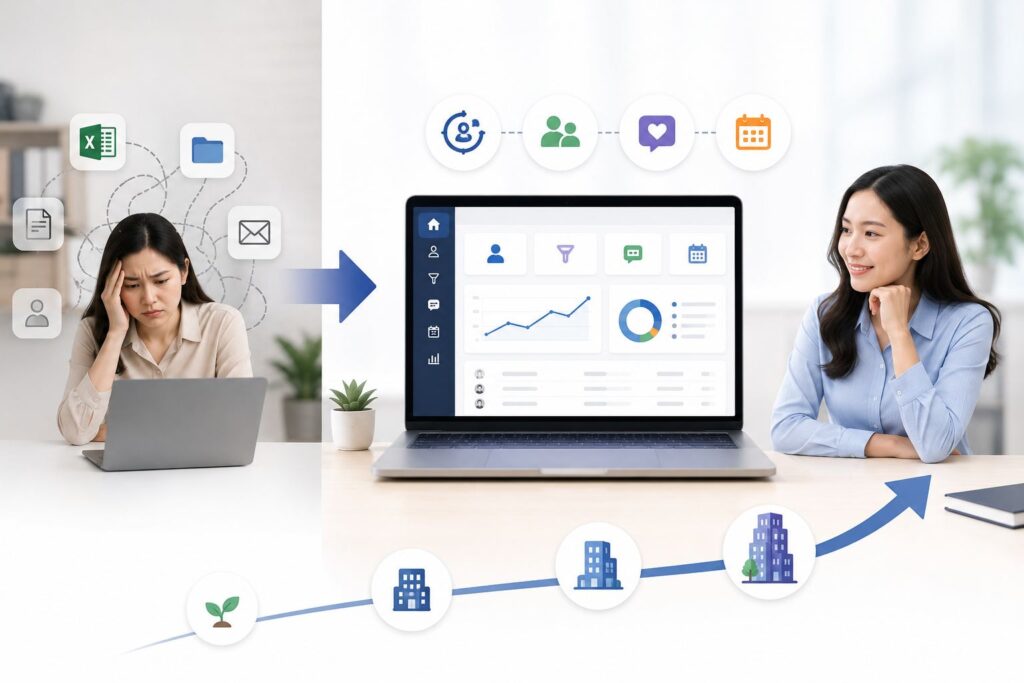
A Mini CRM for Education is not simply a smaller version of a large CRM system. It is a practical approach that enables education SMEs to begin their digital transformation journey with a reasonable investment and an implementation scope that matches their capabilities. By focusing first on solving the core challenges of student management, admissions, and student services, organizations can scale more easily and sustainably in the future.
At WBL Group, we partner with educational organizations to evaluate their current processes, develop a digital transformation roadmap that fits their needs, and select solutions that support each stage of their growth. Instead of pursuing complex systems from the outset, organizations can begin with a solution that matches their current requirements, optimize implementation costs, improve operational efficiency, and build a strong foundation for sustainable long-term growth.