








A business may sell a large number of products without necessarily building long-term customer relationships. If it focuses only on revenue and closing deals, it can easily overlook important factors such as actual customer needs, product experience and post-purchase satisfaction.
This is why the Customer Centric approach is receiving increasing attention in business management. Customer Centric, or a customer-centered approach, is a way of doing business that places customer needs, experiences and satisfaction at the core of business decisions. Instead of focusing solely on selling products, businesses need to understand their customers, meet their needs and maintain relationships throughout the entire interaction process.
To achieve this, businesses need a system that can centralize data, track interaction history and connect activities across departments. This is where a CRM system comes in.
How Does Customer Centric Change the Way Businesses Sell?
The difference between traditional sales and a customer-centered approach lies in the management objectives.
With a traditional approach, businesses often focus on the number of new customers, revenue and deal closing rates. Once a transaction is completed, employees may move on to pursue the next opportunity without having a clear process for following up with existing customers.
Meanwhile, Customer Centric treats every transaction as part of a long-term relationship. Businesses need to pay attention to customers before, during and after a purchase.
- Before the purchase: Understand customer needs, identify their problems and provide relevant information.
- During the purchase: Ensure that consultation, transactions and support are convenient and seamless.
- After the purchase: Monitor the customer experience, collect feedback and maintain ongoing customer care.

For example, a customer who has purchased a product should not simply be recorded as a successful order. Businesses need to know what they purchased, which products they previously showed interest in, whether they encountered any issues during use and when they may need further assistance.
The goal is not just to make a sale, but to give customers a reason to continue choosing the business.
Why Do Businesses Need a CRM System?
To understand and serve customers better, businesses need complete and accessible data. However, customer information is often scattered across multiple tools, such as Excel spreadsheets, email, social media and software used by individual departments.
This leads to three common problems:
Inconsistent Information: The Sales department may have access to consultation history, while the Customer Service department lacks sufficient information when handling a request.
Missed Customer Care Opportunities: Employees may forget follow-up schedules, fail to contact customers after sending quotations or overlook the right time to remind customers about service renewals.
Fragmented Customer Experiences: Customers have to provide the same information repeatedly because departments do not share a common data source.
A CRM (Customer Relationship Management) system helps address these issues by centralizing information on a unified platform.
Businesses can manage contact details, lead sources, consultation history, transactions and support requests in one place. Employees with the appropriate access permissions can retrieve the information they need to continue handling tasks without searching across multiple sources.
CRM is not just a place to store customer lists. It is a tool that helps businesses track and manage the entire customer interaction process.
How Does CRM Help Departments Collaborate to Serve Customers?
A customer-centered approach cannot be implemented by just one department. Marketing, Sales and Customer Service need to work together using the same data source.
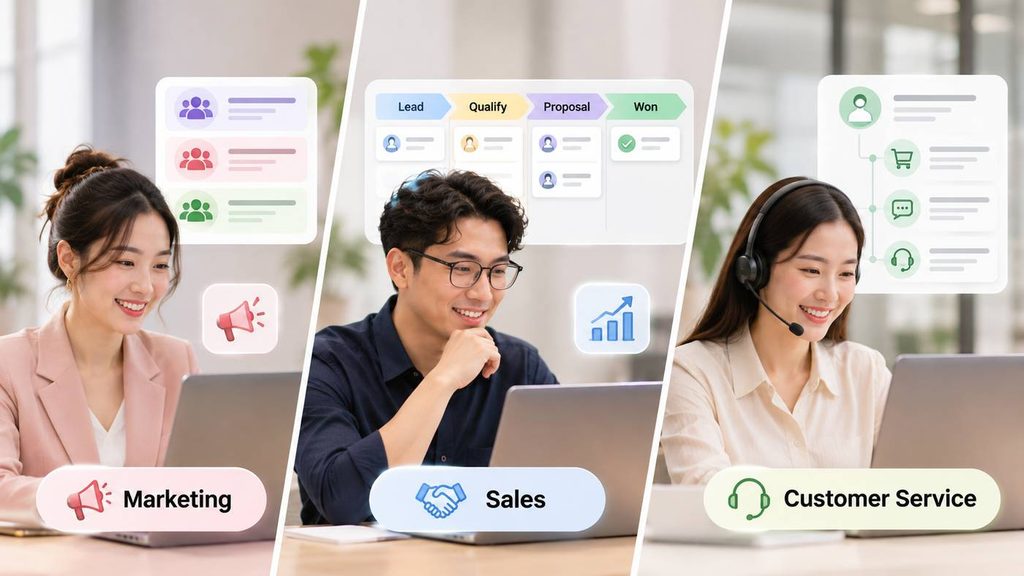
The Marketing department uses customer information to identify acquisition sources, segment customers based on their needs and develop relevant content. Instead of sending the same message to everyone, businesses can tailor marketing activities to different audience groups.
The Sales department tracks leads, communication history, quotations and deal status. Employees can identify which stage each customer is at and determine the next steps, helping prevent missed opportunities and duplicate follow-ups.
The Customer Service department receives and handles requests based on transaction history, product information and previous interactions. This allows employees to address the right issues without asking customers to provide all their information again.
When data is connected, departments no longer operate in isolation. Marketing understands where customers come from, Sales knows what they need, and Customer Service has visibility into previous interactions.
As a result, businesses can deliver a more consistent customer experience while reducing processing time and minimizing errors throughout the service process.
How to Implement a CRM System Effectively?
A CRM system only delivers value when it is built around actual business processes. Businesses should not implement one simply because they want a modern management tool. Instead, they need to clearly define their objectives and the problems they want to solve.
First, businesses need to identify the key data they want to manage, such as contact details, customer needs, lead sources, transaction history and support requests. Data should be updated consistently so that different departments can use it effectively.
Next, businesses need to clearly define each department’s responsibilities for receiving, updating and transferring information. At the same time, access permissions should be configured appropriately to protect data and prevent unnecessary modifications.
Finally, businesses need to choose a solution that suits their scale, workflows and future expansion needs. Implementation effectiveness should be evaluated using specific metrics, such as conversion rates, repeat customer rates, request handling time and customer satisfaction levels.
Customer Centric is not simply a management trend, but a shift in how businesses view and serve their customers. Rather than focusing only on short-term revenue, businesses need to manage relationships throughout the entire journey, from the first point of contact to product usage and post-sales support.
A CRM system provides the data foundation and tools needed to put this approach into practice, helping departments collaborate more effectively and build sustainable customer relationships. WBLGroup works alongside businesses to consult on and implement CRM solutions that align with their operational processes and development goals.