









B2B vs B2C in CRM is one of the most important considerations when designing an effective customer management strategy. You may have invested a significant budget in implementing a CRM system, expecting rapid revenue growth. But the reality is different. Employees complain that the system is difficult to use, customer data keeps growing without generating more sales, and customers continue to leave.
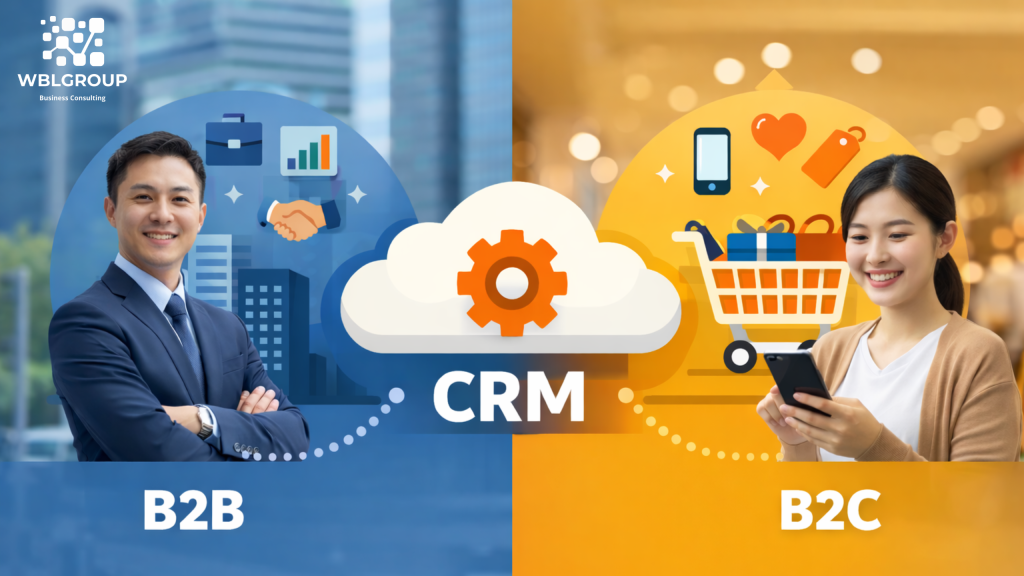
The problem is not the software. The problem is that you are using a B2C approach to measure a B2B business, or vice versa.
When businesses apply the same CRM strategy to both B2B and B2C customers, the system no longer reflects how the business actually operates. This often leads to ineffective sales strategies, poor customer engagement, and inefficient operations.
In today’s digital transformation landscape, misunderstanding the differences between B2B and B2C customers not only reduces CRM effectiveness but also wastes valuable resources. From WBL Consulting Group‘s implementation experience, recognizing these fundamental differences is the foundation for building a CRM system that improves operational efficiency and minimizes lost business opportunities.
1. B2B vs B2C in CRM: Buying Behavior
The difference becomes clear when comparing how customers make purchasing decisions.
- B2C customers usually make purchasing decisions within a relatively short period of time. Their buying behavior is often influenced by emotions, convenience, and immediate shopping experiences.
- In contrast, B2B customers follow a more complex and longer decision making process. A single purchase often involves multiple stakeholders, including operations, finance, procurement, and senior management. Decisions are based not only on personal preference but also on trust, business data, and clear evaluation criteria.
CRM Lesson: If a business designs an overly simplified sales pipeline for B2B customers, many important touchpoints needed to build trust and move deals forward will be overlooked. On the other hand, applying a lengthy multi step sales process to B2C customers may reduce purchasing convenience and drive potential buyers toward competitors.
2. B2B vs B2C in CRM: Data Structure
One of the most common mistakes businesses make is storing every customer using the same simple data structure, often limited to a name and phone number.
This approach lacks the depth required to support effective sales and customer relationship management.
- For B2C customers, CRM should focus on individual customer profiles, including preferences, buying habits, shopping history, and engagement across channels such as email, social media, and advertising campaigns.
- For B2B customers, CRM must manage relationships at the organizational level. A single business account often includes multiple stakeholders, such as decision makers, end users, influencers, and financial approvers. If the CRM system cannot clearly connect these different roles, sales teams will struggle to identify the right contacts and develop an effective account strategy.
3. B2B vs B2C in CRM: Customer Lifetime Value
- B2C businesses typically operate on transaction volume. Individual orders may be relatively small, but businesses process a large number of transactions every day. In this environment, CRM should support effective marketing automation while maintaining personalized customer experiences at scale.
- B2B businesses, however, generate significantly higher value from each contract. Every sales opportunity matters and requires continuous tracking throughout the sales cycle. CRM therefore becomes a decision support platform that helps sales teams monitor progress, maintain customer engagement, and avoid missing critical business opportunities.
Ask yourself this question: Are you managing an important B2B client using the same automated promotional messages designed for retail consumers? If the answer is yes, it may explain why valuable customers suddenly stop doing business with you.
How to Build a CRM System That Works for Both B2B and B2C
To avoid having “plenty of data but very little business value,” companies should design CRM around different customer segments rather than applying a single model to everyone.
- First, build separate sales pipelines for each customer type. For B2B, the pipeline should reflect negotiation stages, proposal reviews, and contract approval processes. For B2C, the pipeline should be more flexible and closely aligned with customer behavior and marketing campaigns.
- Second, design your CRM data structure intentionally. For B2B organizations, company information, industry, business size, and stakeholder roles are essential. For B2C customers, CRM should focus on purchasing behavior, preferences, engagement history, and customer interests to deliver personalized experiences.
- Finally, implement automation correctly. Automation is much more than sending mass emails. Effective automation delivers the right message, to the right customer, at the right time, based on each stage of the customer journey, helping prospects move naturally toward a purchasing decision.
A Common Mistake: Implementing CRM Before Defining the Strategy
Many businesses invest in CRM software before clearly understanding their operational challenges. As a result, the system often fails to match real business processes, leading to low user adoption and poor business outcomes.
It is important to recognize that CRM is only a business tool. Your operational strategy and customer engagement approach are what ultimately determine whether the CRM system succeeds.
If your business is struggling with fragmented customer data, limited reporting visibility, or uncertainty about how to design different processes for B2B and B2C customers.
Do not start by buying software, start with a conversation.
At WBL Consulting Group, we begin by analyzing your current business operations, identifying your objectives, and designing a CRM system that fits the way your business actually works. Our goal is not simply to implement technology. Our goal is to help businesses turn customer data into business value, optimize operations, and achieve sustainable growth.
👉 Let WBL help you turn your data into profit: https://wbl.group/en/solutions/
Contact our team today to discuss a practical digital transformation strategy and build a CRM system that supports long term business success.