









What Is CRM vs ERP?
Throughout the digital transformation journey, CRM and ERP are two core systems that businesses will encounter at a certain stage. However, misunderstanding the roles of these two systems often leads to implementing them in the wrong order or failing to realize their full value.
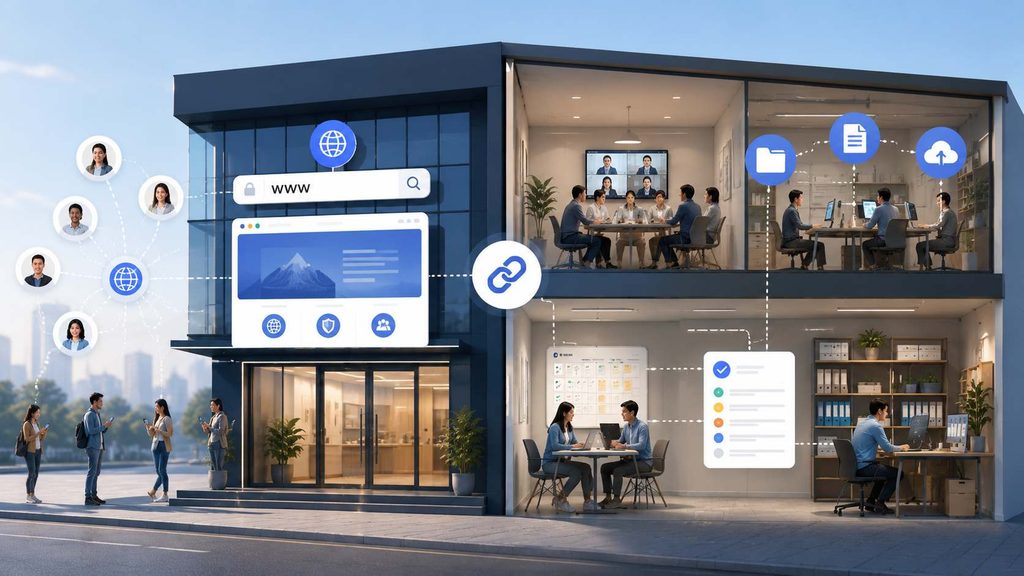
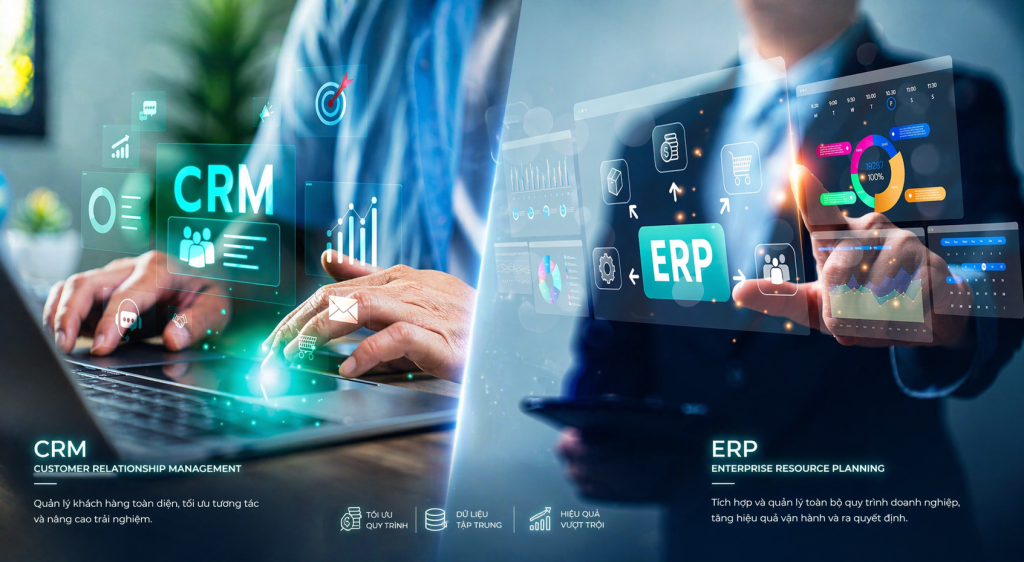
A CRM (Customer Relationship Management) system focuses on the entire customer journey, from the moment a prospect first expresses interest until after the purchase. It helps businesses manage customer data, sales activities, marketing, and customer service.
An ERP (Enterprise Resource Planning) system focuses on internal business operations, such as finance, accounting, human resources, inventory management, and manufacturing.
Simply put, CRM helps businesses sell products or services, while ERP helps businesses deliver those products or services and manage operations efficiently behind the scenes.
How Are CRM and ERP Different?
1. CRM vs ERP: Revenue Growth vs Operational Efficiencyfficiency
CRM is designed to support revenue growth. Every function revolves around acquiring customers, tracking sales opportunities, and increasing conversion rates.
For example, a sales team using CRM can identify which stage each customer is in, determine who needs follow up, and recognize which opportunities have the highest chance of closing.
ERP, on the other hand, focuses on optimizing internal operations. It helps businesses manage cash flow, control inventory, monitor expenses, and ensure that operational processes run smoothly.
For example, once a deal is closed in CRM, ERP takes over to process inventory, record revenue, and manage accounts receivable.
2. CRM vs ERP: Front Office vs Back Office
CRM serves front office departments, meaning teams that interact directly with customers, such as Sales, Marketing, and Customer Service.
For example, when a customer submits a registration form on a website, CRM captures the lead, assigns it to the appropriate salesperson, and tracks the entire customer interaction.
ERP serves back office departments such as Finance, Accounting, Human Resources, Manufacturing, and Warehouse Management.
For example, once an order is confirmed, ERP generates the invoice, deducts inventory, and updates financial reports.
3. CRM vs ERP: Customer Data vs Operational Data
CRM focuses on customer data, including personal information, interaction history, purchasing behavior, and sales pipeline information.
For example, CRM can record whether a customer has opened an email, viewed a particular product, or communicated with the sales team.
ERP focuses on internal operational data, including financial records, sales orders, inventory, costs, and manufacturing information.
For example, ERP enables businesses to know exactly how much inventory is available, what production costs are, and the actual profit generated from each order.
4. CRM vs ERP: Revenue Growth vs Cost ControlControlling Costs
CRM creates value by helping businesses better understand their customers and improve sales performance.
For example, CRM can increase conversion rates by reminding sales representatives to follow up at the right time or by recommending high potential prospects.
ERP creates value by helping businesses control costs and optimize operational processes.
For example, ERP can reduce inventory losses or improve cash flow by managing receivables and operating expenses.
5. CRM vs ERP: Who Uses Each System?
CRM is typically used by Sales, Marketing, and Customer Service teams.
For example, a Sales Manager uses CRM to monitor individual sales performance and forecast revenue.
ERP is typically used by operational departments such as Accounting, Human Resources, Manufacturing, and Management.
For example, the Accounting department uses ERP to monitor revenue, expenses, and prepare financial reports.
Should Businesses Implement CRM or ERP First?
Rather than asking whether to choose CRM or ERP, businesses should determine which system should be implemented first based on their actual business challenges.
If the business is struggling with customer related issues such as lost customer data, poor pipeline visibility, or heavy dependence on individual salespeople, CRM should be the starting point.
If the main challenges involve internal operations, such as lack of financial transparency, poor inventory control, or complex operational processes, ERP should be prioritized.
In practice, these two systems do not replace one another. Instead, they complement each other. A business aiming for sustainable growth will eventually need both CRM and ERP, but they should be implemented in the right sequence.
Common Mistakes When Implementing CRM and ERP
One common mistake is implementing systems based on market trends rather than actual business needs.
For example, many businesses invest in ERP before gaining control over customer data. As a result, operational processes become more organized, but there is not enough sales input to generate revenue.
On the other hand, implementing CRM before internal processes are clearly defined may increase sales, but the business may struggle to fulfill orders and manage operations effectively.
Another common mistake is purchasing software before determining how it will actually be used, which often prevents the system from delivering its intended value.
CRM and ERP are not competing systems. They are complementary components of a complete business management framework. CRM helps businesses manage customers and generate revenue by understanding customer needs, while ERP ensures that internal operations run efficiently to protect profitability.
The key question is not which system is better, but which business challenge needs to be solved first and where the implementation should begin. By identifying the right priorities and implementation sequence, businesses can maximize the value of both CRM and ERP throughout their growth journey.
If you are still evaluating CRM vs ERP, WBL Consulting Group can help assess your business processes and recommend the most suitable implementation roadmap. WBL begins by understanding your actual business operations before recommending the most suitable implementation roadmap, ensuring that your systems not only exist but also create measurable value for your business.
Learn more at https://wbl.group/ or contact us to discuss the right implementation roadmap for your business.