











Does an SME Need ERP depends on the complexity of its operations, not just the size of its workforce or revenue. A small or medium-sized enterprise can still face significant management challenges when Sales, Accounting, Inventory and Purchasing use separate data, processes are disconnected and many tasks have to be handled manually.
Instead of assuming that ERP is only for large corporations, SMEs can start with a scope that fits their current needs and expand as their business grows. The checklist below helps businesses determine whether their current management system still meets their needs or whether it is time to consider ERP.
1. Is Data Across Departments Becoming Fragmented?
Check how an order is processed from the moment Sales closes the deal with a customer until Accounting confirms payment and the Warehouse completes delivery. If each department stores information in a different Excel file, software system or communication group, employees may have to constantly ask for updates, send data and make manual changes to ensure everyone has the same understanding of the order status.
This is also the first sign to consider when asking Does an SME Need ERP: are the current software systems still helping departments coordinate effectively, or are employees having to connect the information themselves?
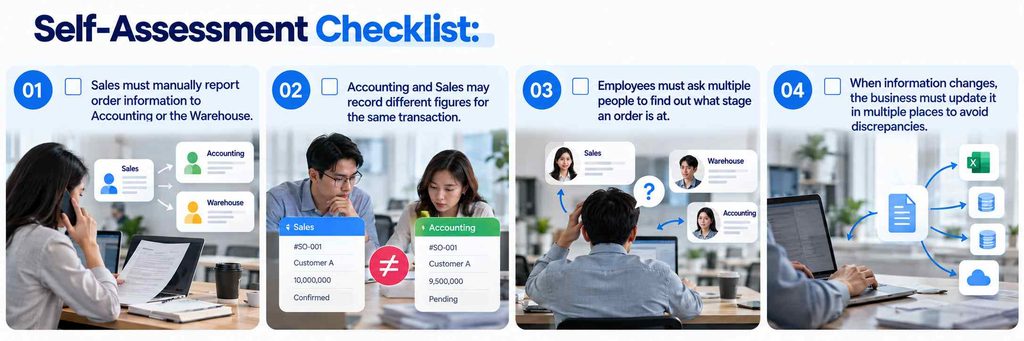
If these situations occur frequently, the problem is not simply a lack of management tools. The business lacks connections between its business functions. This is one of the key signs to consider when evaluating whether an SME needs ERP, because ERP can help departments work with related data instead of managing each area independently.
2. Does the Business Frequently Have to Enter and Check Data Manually?
When a business is still small, using Excel to track orders, manage Inventory or consolidate revenue may be sufficient. However, as transaction volumes increase, employees may have to enter the same information in multiple places, reconcile figures across files and correct errors when discrepancies are found. The time spent on these tasks increases with the workload, while the business may not generate any corresponding additional value.
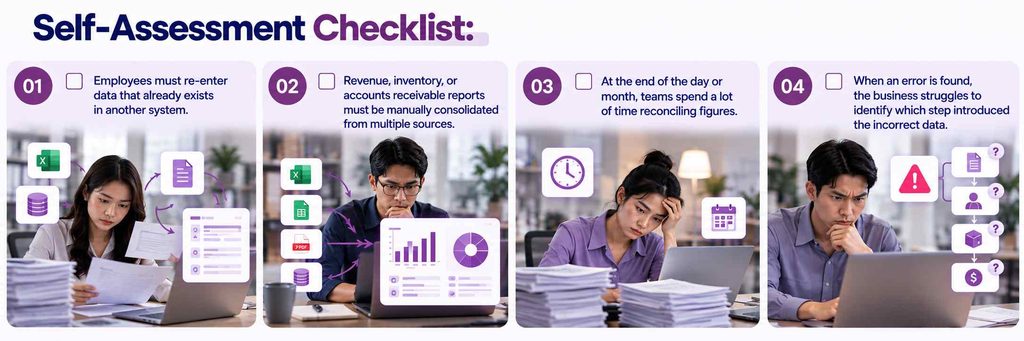
If these tasks are repeated frequently, the business should assess its opportunities to automate processes and connect data. ERP can help reduce duplicate data entry and establish a unified data foundation for the business functions managed through the system. However, the actual results still depend on process design, data quality and how well the system fits operational needs.
When evaluating Does an SME Need ERP, businesses should also calculate the time spent entering data, reconciling figures and correcting errors instead of looking only at the cost of purchasing software. Tasks repeated every day can become a significant burden as transaction volumes grow.
3. Is the Business Struggling to Control Inventory, Costs and Profitability?
Another sign that an SME may need ERP is the lack of a clear picture of its operations. For example, Sales continues to accept orders without having a clear view of available stock; Purchasing orders more products without checking actual demand; or the business owner only learns about profitability after Accounting consolidates data from multiple sources. When information is not updated promptly, business decisions may be based on outdated figures.
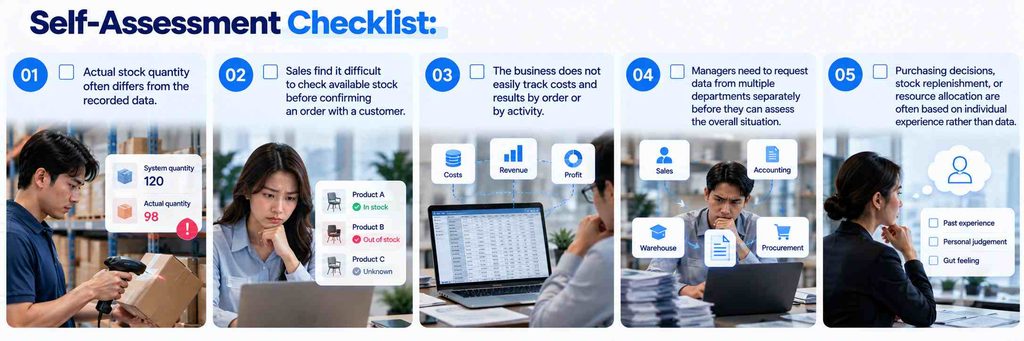
If these signs appear frequently, the business should reassess how data is managed and transferred between business functions. ERP can connect Sales, Purchasing, Inventory and Accounting, helping departments coordinate using a more unified source of data.
However, SMEs do not necessarily need to implement the entire system from the beginning. Implementation should prioritize the business functions causing the most obvious difficulties and then expand according to actual needs.
4. Do Processes Depend Too Much on a Few Key Employees?
In many SMEs, work still gets done thanks to the experience of employees who have been with the business for years. They know how to handle special orders, remember the steps that need to be checked or understand exceptions that have not been documented in internal procedures. This approach can be effective when the team is small, but it becomes a risk when the business hires more people, expands its operations or needs to replace employees.
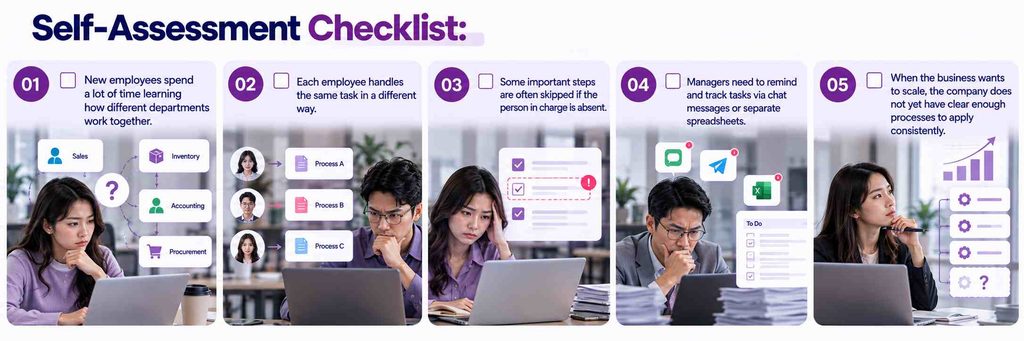
When considering Does an SME Need ERP, the business should also assess whether its current processes can remain stable as the team grows or responsibilities change. If work depends too heavily on individual experience, standardizing processes and defining responsibilities will provide an important foundation before expanding the system.
5. Does an SME Need ERP? How Can It Start with a Lean Approach?
For SMEs, Does an SME Need ERP does not mean implementing the entire system immediately. The first step is to identify which business functions are consuming too much time, creating data discrepancies or preventing departments from coordinating effectively. The business can start with a priority area, evaluate its impact on actual operations and then expand into other functions.
With platforms that organize applications by business function, such as Odoo, businesses can select applications that fit their current needs and expand when necessary. This approach is outlined in Odoo’s overview of ERP for small businesses. Starting lean does not mean choosing the fewest features possible, but identifying the right business functions to connect first.
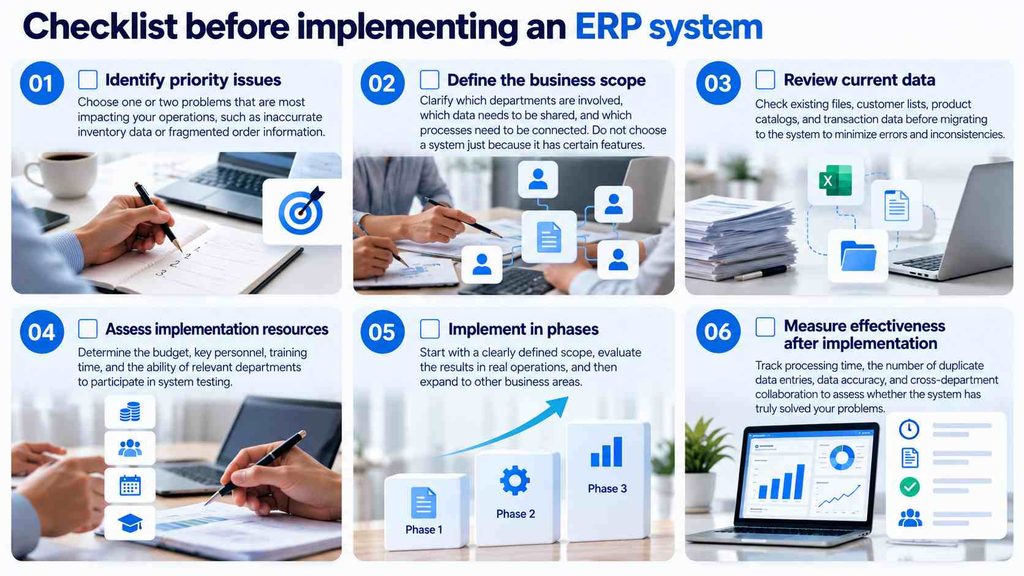
The important point is not to turn an ERP project into a software purchase followed by an attempt to force all existing ways of working into the system. Before configuration begins, the business needs to understand its current processes, identify what is not working well and define how it wants operations to work. The clearer the scope, the easier it becomes to control the timeline, costs and the level of change the team needs to adapt to.
Does an SME Need ERP should not be decided based on business size alone. When fragmented data, manual tasks and disconnected processes begin to hinder growth, ERP may be a worthwhile next step to consider. Businesses do not need to implement everything from the beginning, but they do need to choose the right business challenge, the right scope and a roadmap that can expand according to actual needs.
WBLGroup works with businesses to assess processes, define implementation scope and develop an Odoo implementation roadmap that fits their available resources, so technology supports business operations instead of creating additional operational burdens.