









Choosing the right hotel PMS is one of the most important technology decisions a hotel can make. The decision may take only a few days, but it can affect the way a hotel operates for many years. The right system can become the foundation for connecting CRM, reporting, customer care and other technologies. On the other hand, if the system does not match the hotel’s size and development direction, the business may have to pay more in time, costs, data and even the effort required to retrain the team.
Therefore, the question should not be which PMS is the best? Each system is built for a different customer group and a different operational need. What matters more is identifying where the hotel is today, what problems it needs to solve and how it plans to develop over the next few years.
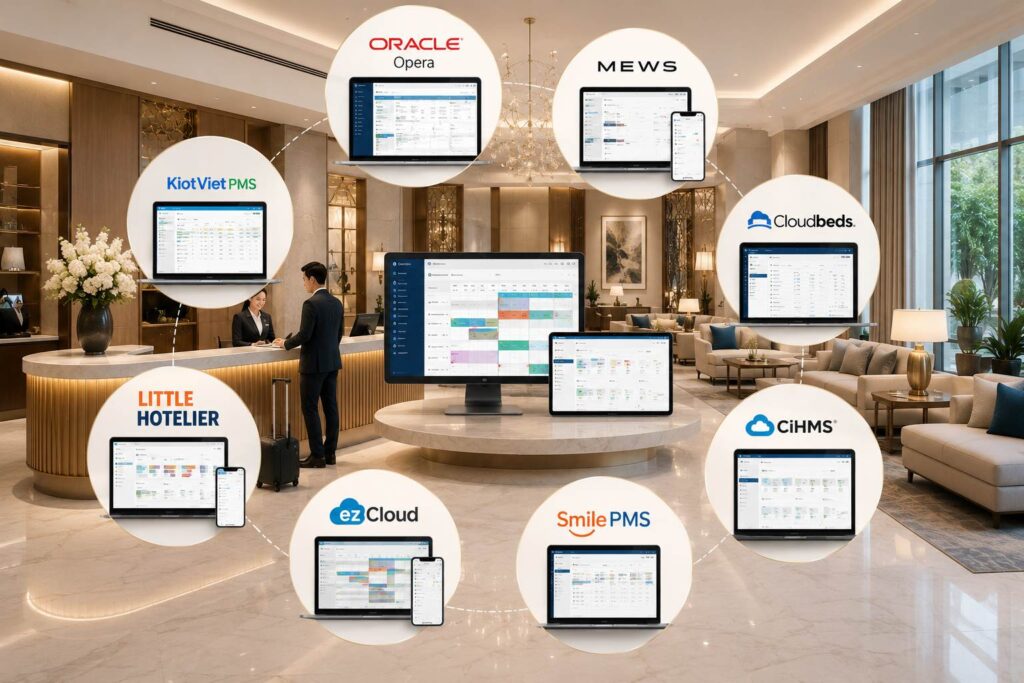
In this article, WBL Group summarizes 8 popular PMS solutions mentioned in WBL Insight #6 and divides them into 4 groups to make the comparison easier to understand.
What is a Hotel PMS and why is it important?
PMS (Property Management System) is a hotel operations management system. It is where core operations such as reservations, room status, check-in, check-out and the daily activities of the front desk and reservations departments are managed.
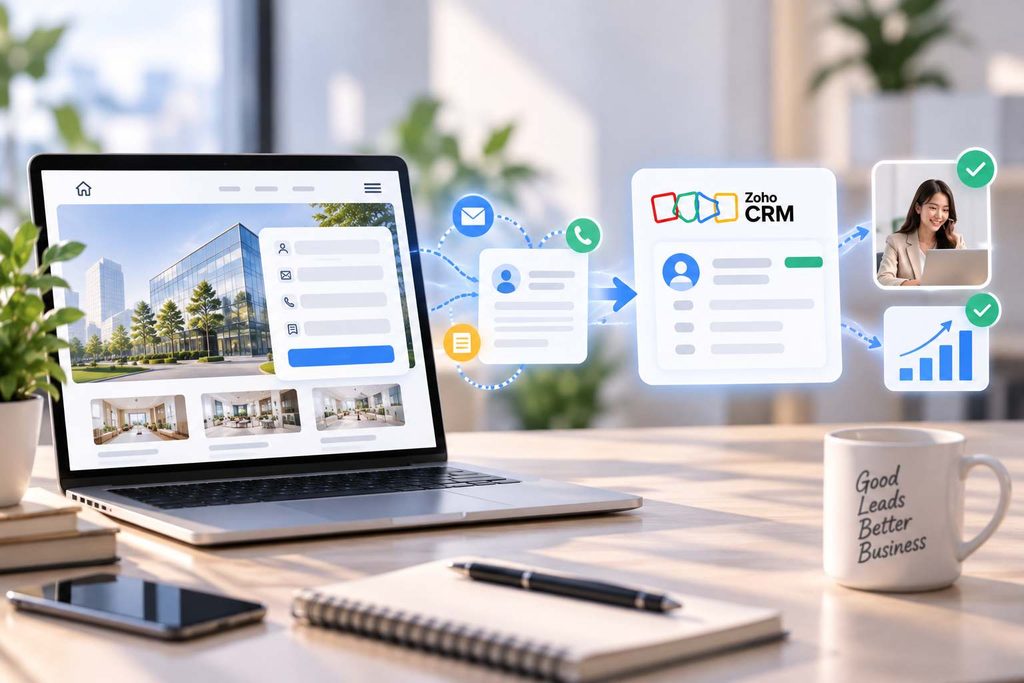
A PMS can be considered one of the most important data platforms in a hotel. When a business wants to implement CRM, connect other systems or build a centralized management model, the quality of the data and the connectivity of the PMS will directly affect the next steps.
Therefore, choosing a PMS is not simply about choosing software to manage rooms. It is also about choosing a platform that the hotel can continue to develop with in the future.
How are the 8 PMS solutions divided into 4 groups?
For easier comparison, the 8 systems are divided into 4 pairs based on scale and operational approach.
| PMS Group | PMS | Suitable for |
|---|---|---|
| Group 1 | Oracle OPERA and Mews | Large hotels, resorts, hotel chains and businesses focused on technology |
| Group 2 | Cloudbeds and CiHMS | Independent hotels, mid-sized properties and growing businesses |
| Group 3 | Smile PMS and ezCloud | Hotels in Vietnam, SMEs and businesses seeking stable operations |
| Group 4 | Little Hotelier and KiotViet PMS | Mini hotels, homestays and small-scale accommodation properties |
This grouping is not a ranking. Each pair represents a different need, and no system is automatically better than all the others.
Group 1: Oracle OPERA and Mews
When the hotel needs a platform that can go further
Oracle OPERA belongs to the PMS category designed for large-scale hotels, resorts and hotel chains. OPERA’s strength lies in its ability to handle complex operating models, multiple properties, multiple departments and large volumes of data. It is also a system that has been used by many international hotel brands.
In return, this is a significant investment. Implementation time is often longer depending on the scale of the project, and the team needs to receive proper training. In return, OPERA offers strong connectivity with CRM, POS and other systems, making it suitable for businesses that have already defined a long-term development direction.
Mews also targets businesses with a structured technology development strategy, but takes a more modern and flexible approach. One of Mews’ key strengths is its ability to automate many operational tasks and connect with other systems through an open architecture.
If OPERA is better suited to large and complex operating models, Mews is more suitable for hotels looking to modernize their processes and build a scalable technology ecosystem.
Consider this group if: the hotel is large, is developing into a chain or has already identified digital transformation as a long-term strategy.
Group 2: Cloudbeds and CiHMS
When balancing current operations with scalability is important
Cloudbeds stands out for its ability to scale. Instead of trying to do everything within a single piece of software, Cloudbeds provides a platform that can connect with additional solutions as the business grows. The system is suitable for boutique hotels, independent hotels and mid-sized accommodation properties.
One notable strength of Cloudbeds is its balance. Hotels do not necessarily have to invest in an overly large system from the beginning, while still having room to expand when the need for CRM, POS or other solutions arises.
CiHMS, meanwhile, has strengths in managing multiple properties on a single platform. This is a common need when a business begins to grow from a single hotel into a chain. Data and operations across multiple properties can be managed centrally instead of being operated as separate systems.
CiHMS is suitable for 4 to 5-star hotels or chains that are in the process of expanding. However, in terms of ready-made integration ecosystem, the system is still not as extensive as some larger international platforms.
Consider this group if: the hotel has moved beyond standalone operations and is beginning to seriously consider system scalability.
Group 3: Smile PMS and ezCloud
When prioritizing suitability for the Vietnamese market
While the first two groups focus more on scalability and technology ecosystems, Smile PMS and ezCloud are closer to the practical needs of many Vietnamese hotels.
Smile PMS has an advantage in terms of local implementation experience. The system is designed to align closely with the operations and practices of Vietnamese hotels, while requiring a relatively reasonable investment. It is worth considering for 3 to 5-star hotels that need a stable and accessible system.
Meanwhile, ezCloud is more suitable for businesses at the early stage of their digital transformation journey. The key strengths emphasized by WBL are relatively fast implementation, ease of training and optimized initial investment costs.
This group is suitable for businesses that do not want to start with an overly complex system but still want to move room and booking management onto a structured platform.
Consider this group if: the hotel operates in Vietnam, prioritizes stability and ease of implementation, and wants to control its investment budget.
Group 4: Little Hotelier and KiotViet PMS
When simplicity and just enough functionality matter most
A small hotel does not necessarily need a PMS with hundreds of features.
Little Hotelier is clearly designed for mini hotels, homestays and small accommodation properties. For models with a lean team, relatively simple processes and an owner who can directly monitor operations, a simple system can sometimes be more suitable than an Enterprise platform.
KiotViet PMS also targets small accommodation properties that need fast implementation, ease of use and an accessible initial investment. KiotViet’s strengths lie largely in user experience and familiarity among Vietnamese businesses.
However, KiotViet PMS is still a relatively new product in the hotel industry. Its integration ecosystem and experience with large-scale projects are not as extensive as those of platforms that have been developed for many years. Therefore, if the business already plans to develop into a chain or build a large technology system, scalability should be considered from the beginning.
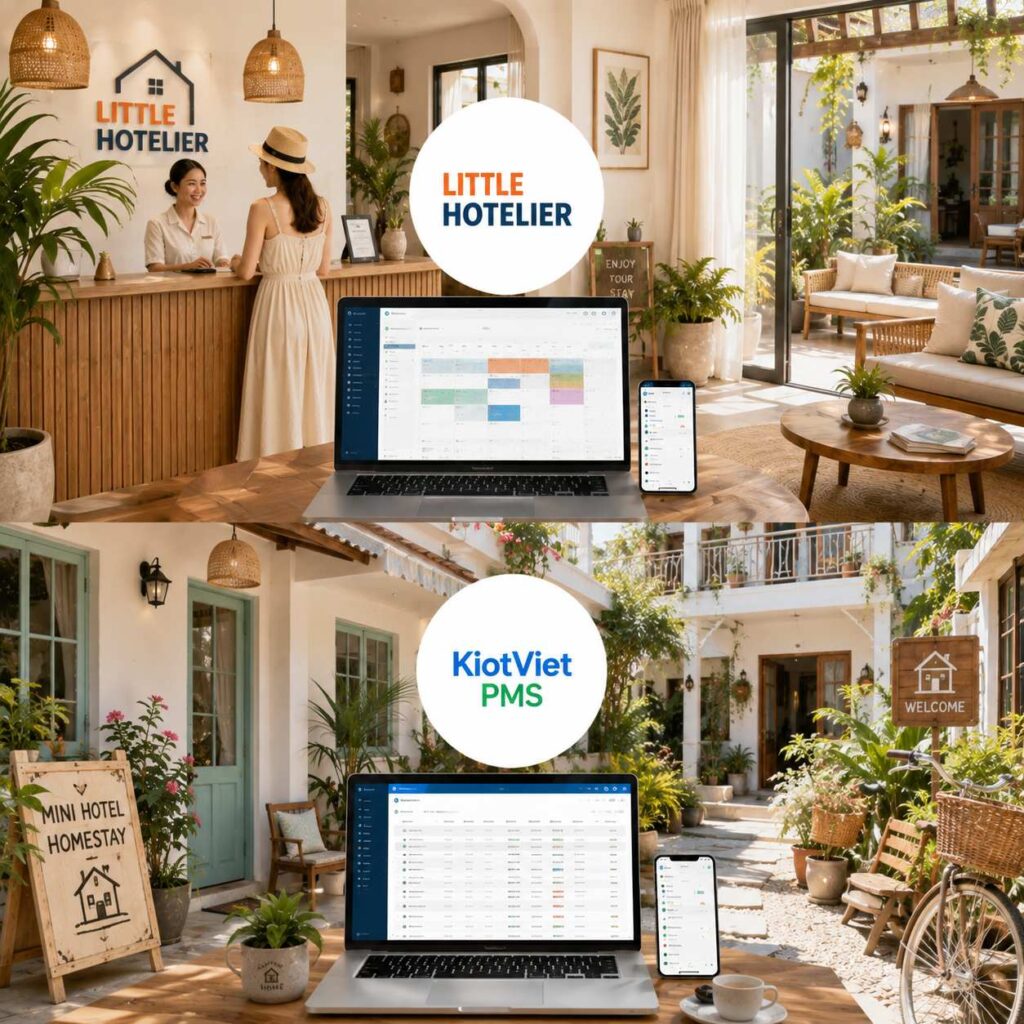
Consider this group if: the hotel is small, has a lean team and prioritizes simplicity over a system with too many features.
Where is your hotel today?
Instead of asking “Which PMS is the best?”, start with three questions.
First, what is currently taking up the most time for your team?
If the problem lies in basic operations such as bookings, rooms and check-in, a PMS that fits the hotel’s current scale may already solve most of its needs.
Second, where does the hotel want to be in three to five years?
A 30-room hotel and a business preparing to open its fifth property should not have the same selection criteria. Scalability needs to be considered from the beginning instead of waiting until the current system becomes a limitation.
Third, after the PMS, does the business want to connect CRM, management reporting or other systems?
If the answer is yes, integration capabilities need to become an important criterion. A PMS may meet current operational needs well but create difficulties when the business wants to build a larger technology ecosystem.
Quick PMS selection guide by need
| If your hotel… | May prioritize |
|---|---|
| Has a large scale, multiple properties and complex processes | Oracle OPERA |
| Wants to automate and modernize operations | Mews |
| Wants to expand its system step by step | Cloudbeds |
| Is developing into a chain | CiHMS |
| Prioritizes stable operations in Vietnam | Smile PMS |
| Is just beginning its digital transformation | ezCloud |
| Is a mini hotel or homestay | Little Hotelier |
| Wants fast, simple and accessible implementation | KiotViet PMS |
The table above is not a ranking. It only helps businesses narrow down their options based on their current needs and scale. A more powerful system is not necessarily a more suitable system.
PMS Is the Foundation, Not the Destination of Digital Transformation
A suitable PMS is an important foundation for a hotel to continue building the next stages of digital transformation. When booking, room and stay data are properly managed, the business has a stronger foundation for connecting CRM, building management reports, managing customer relationships and developing post-stay customer care activities.
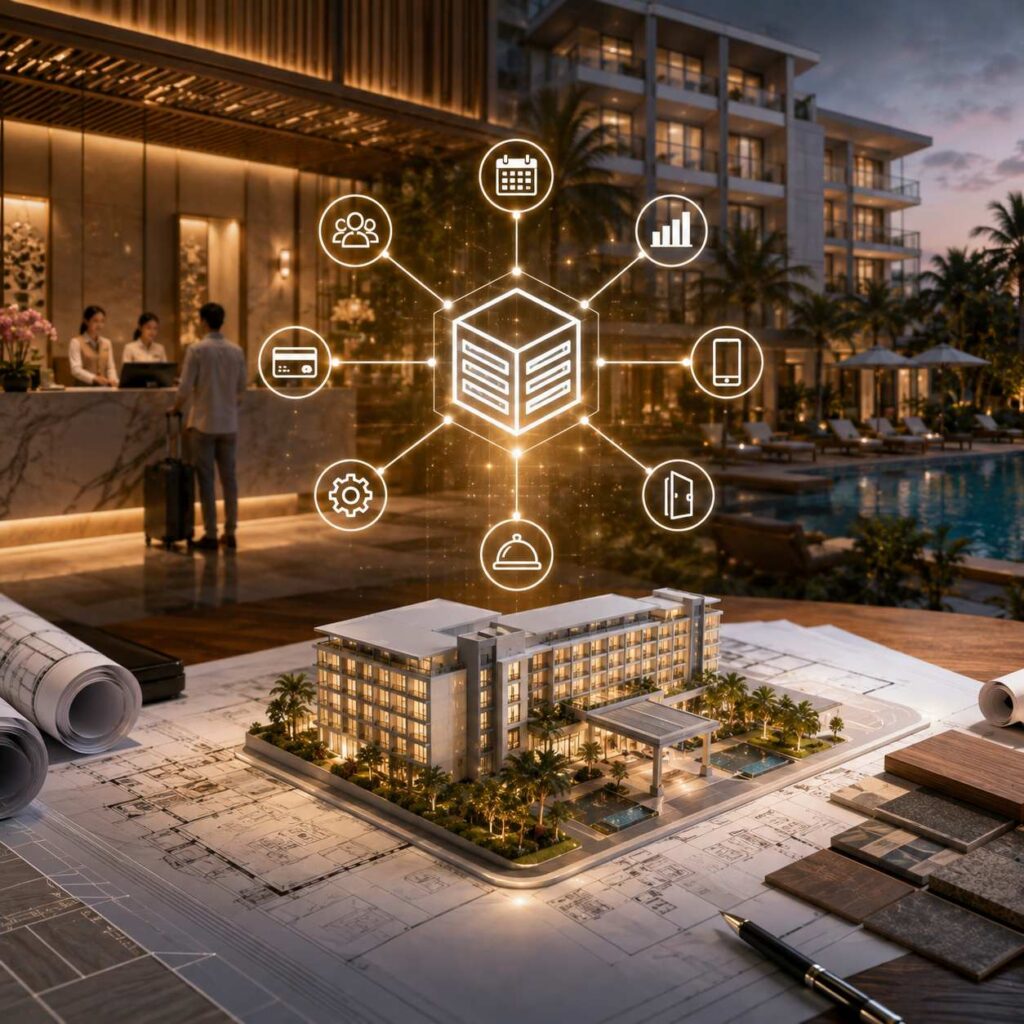
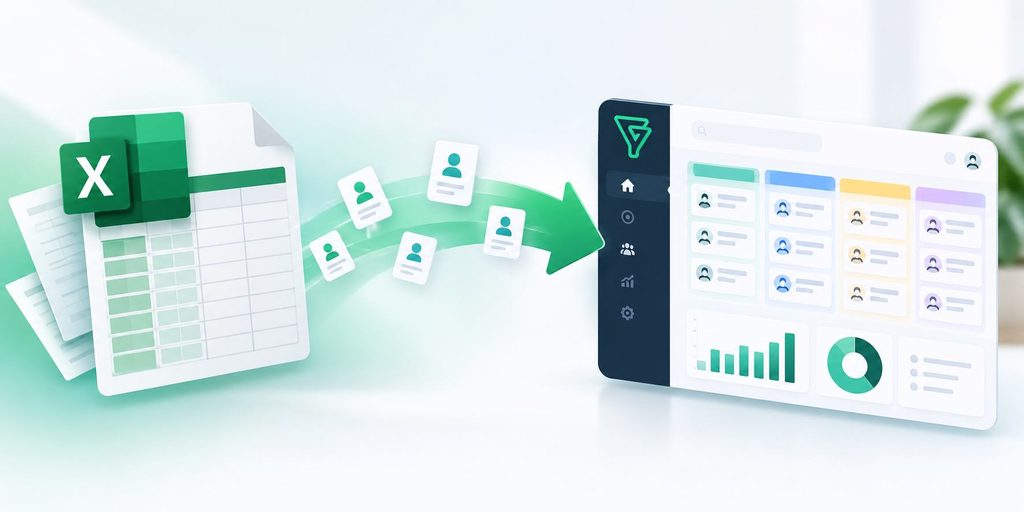
On the other hand, if operational data is scattered or the current system does not meet the business’s development direction, subsequent projects can become much more complicated. WBL also frequently encounters situations where bookings are stored in one place, guest information in another, some processes are still managed in Excel, and data has to be entered again between departments. When the business begins to expand or connect additional systems, these gaps become much bigger problems.
Therefore, choosing a PMS should be viewed as laying the foundation for the hotel’s technology architecture, rather than simply purchasing room management software.
There is no single PMS that is suitable for every hotel. Oracle OPERA is strong for large-scale operations. Mews stands out in automation. Cloudbeds balances operations and scalability. CiHMS is suitable for multi-property management. Smile has an advantage in the Vietnamese market. ezCloud is suitable for businesses beginning their digitalization journey. Little Hotelier and KiotViet are more suitable for small accommodation properties that need simplicity and accessibility.
The most important thing is not to find the system with the most features, but to find the PMS that fits the way the hotel operates today and its development direction in the future. Choosing the right platform from the beginning will make the next stages of digital transformation smoother instead of forcing the business to change systems after it has already grown too far.
Watch WBL Insight #6: Comparing 8 Popular PMS Solutions in Vietnam
If you want to see the differences between Oracle OPERA, Mews, Cloudbeds, CiHMS, Smile PMS, ezCloud, Little Hotelier and KiotViet PMS more visually, WBL Group has analyzed all 8 systems in WBL Insight #6.
The video does not rank which PMS comes first. Instead, it focuses on the more important question: which system fits your hotel model, which strengths should you leverage, and which limitations should you understand before making a choice?
Watch WBL Insight #6 on YouTube to follow the full comparison and identify the right choice for your hotel.
WBLGroup works with businesses to assess their current operations, design system architecture and build a digital transformation roadmap that fits their actual operating environment.