










What Is a Customer Journey and Why Does It Matter?
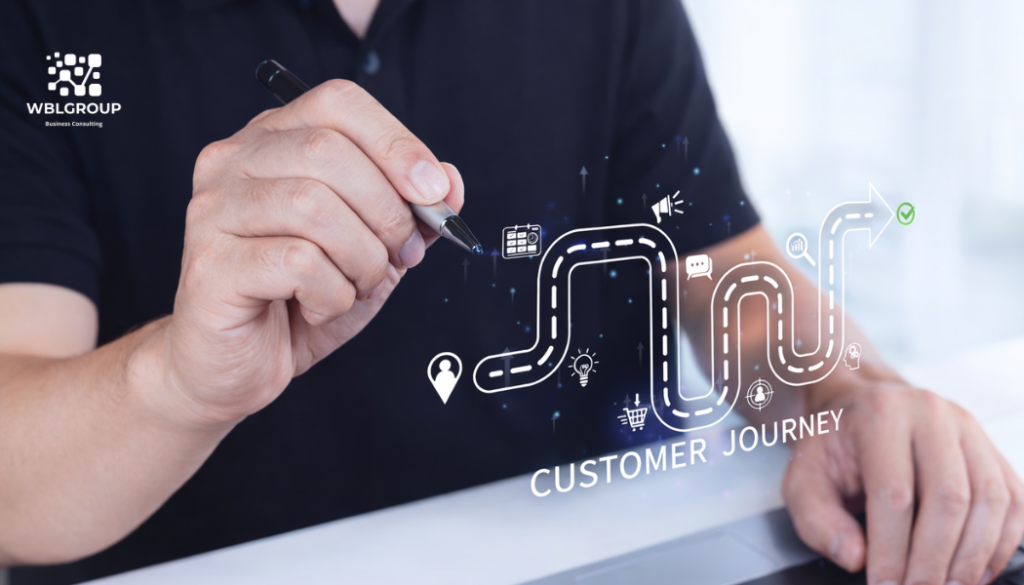
A customer journey is the complete experience a customer has with a business, from the moment they first become aware of a brand to the time they return as a loyal customer. According to Salesforce, the customer journey includes every touchpoint where customers interact with a business throughout their relationship.
The customer journey does not begin when a purchase is made. It begins the first time someone discovers your business, whether through an advertisement, a blog article, a recommendation, or social media. Likewise, the customer journey does not end after payment. When managed effectively, it continues through customer support, engagement, retention, and long term relationship building.
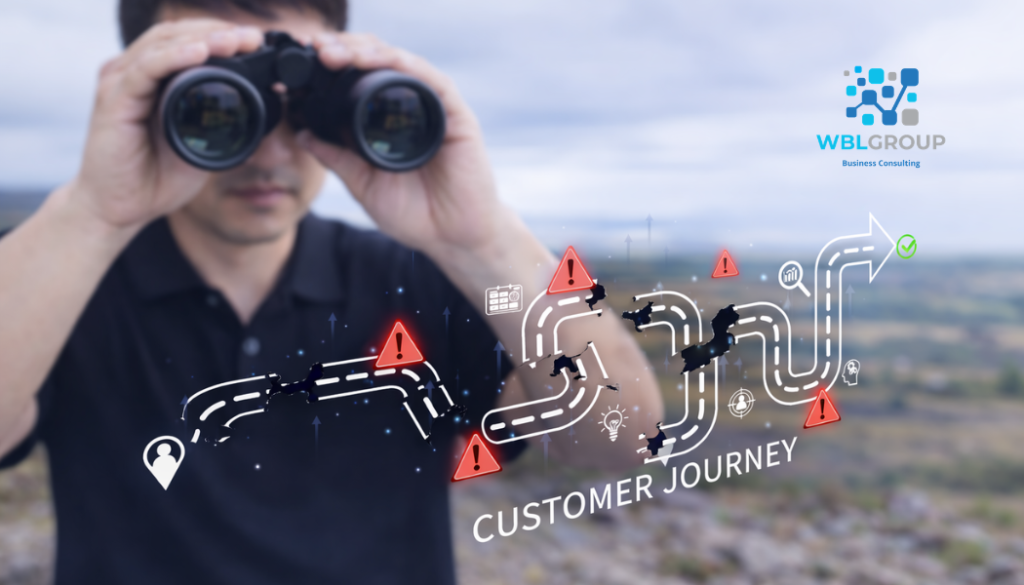
The challenge is that most businesses never see the complete customer journey.
Marketing sees leads. Sales sees deals. Operations sees active customers. Every department performs its own responsibilities well, yet no one has a complete view of the entire customer journey.
Without that complete picture, businesses cannot identify where customers are, what they are thinking, or, most importantly, where they leave. According to Harvard Business Review, the biggest issue is not individual customer touchpoints, but the inability to connect the entire customer journey into one continuous experience.
What matters is not individual touchpoints, but the entire journey.
Harvard Business Review
Why Does the Customer Journey Break Down?
A broken customer journey is rarely caused by a lack of software. It happens because different parts of the business are disconnected. Even more concerning, the breakdown usually occurs gradually throughout the customer journey rather than at one obvious point.
Below are the most common causes.
1. Customer Data Is Scattered
Customers often interact with multiple channels before making a purchase. They may see an advertisement, visit your website, submit a form, send a message, or make a phone call. However, this information is frequently stored across multiple systems. As a result, each department only sees a small portion of the customer journey, making it impossible to understand the complete customer experience or optimize it effectively.
2. Marketing and Sales Lose Information During Handover
Marketing generates qualified leads, but sales often has no visibility into where those leads came from or what content they previously engaged with. Information does not travel with the customer. From the customer’s perspective, this means repeating the same story every time they speak with someone new. Every repetition weakens the customer journey and damages the overall experience.
3. No Clear Sales Pipeline
Many businesses do not know where customers are within the buying process. Without standardized stages or consistent follow up processes, customer engagement depends entirely on individual employees. Some salespeople follow up consistently, while others forget. As a result, potential customers quietly disappear during small gaps in the customer journey that no one notices.
4. No Supporting System
Customers rarely make purchasing decisions after the first interaction. They require multiple touchpoints throughout the customer journey. Without reminders, workflow automation, or CRM support, everything depends on human memory, which is never consistent enough to manage a growing customer base.
5. Inconsistent Customer Experience
Customers may initially be impressed by a professional advertisement. However, when they eventually speak with the sales team, the experience may not match their expectations. This inconsistency reduces trust, and once trust declines, customers often leave regardless of product quality.
6. No Post Sales Engagement
Many companies consider the customer journey complete once a sale is closed. There is no follow up, no customer nurturing, and no ongoing relationship management. Consequently, each customer generates value only once instead of becoming a long term source of recurring revenue.
7. Departments Operate Independently Instead of Following the Customer Journey
This is often the root cause. Marketing, sales, and operations each perform their own responsibilities effectively. However, without a shared system connecting every department, the customer journey becomes fragmented. A business may appear busy internally while customers quietly abandon the journey without anyone understanding why.
How Can Businesses Build a Connected Customer Journey?
The solution is not to do more. It is to reconnect the entire customer journey.
Start by looking at the entire customer journey. Where do customers come from? Which touchpoints do they go through? Where do they stop, and why?
Once the complete customer journey has been mapped, businesses need a centralized system to bring all customer data into one place. This is where CRM becomes the operational hub. It is not simply a tool for storing customer information, but a platform that helps businesses gain a clear view of the entire customer journey, understand customer behavior, and connect interactions across every department.
When data becomes connected, businesses can redesign their sales pipeline, standardize business processes, and deliver the right customer experience at every stage of the customer journey.
At that point, the customer journey is no longer just a marketing concept. It becomes a complete operational system. According to McKinsey & Company, effectively managing the customer journey can directly improve revenue growth and customer retention. A well designed customer journey transforms every customer interaction into an opportunity to strengthen relationships and create long term business value.
WBL’s Perspective on Customer Journey
At WBLGroup, we do not treat the customer journey as a theoretical marketing framework. We view the customer journey as an operational system that must be intentionally designed.
An effective business system requires more than software. It requires customer data, business processes, and people to work together as one connected flow throughout the entire customer journey.
If your business generates leads but struggles to convert them, attracts customers but fails to retain them, or simply cannot identify where customers leave, the underlying problem may not be your marketing or sales efforts.
The real issue may be a disconnected customer journey.
WBLGroup helps businesses analyze their entire customer journey, identify operational gaps, and redesign every stage into a connected experience where every customer touchpoint has a clear purpose and contributes to sustainable business growth.