











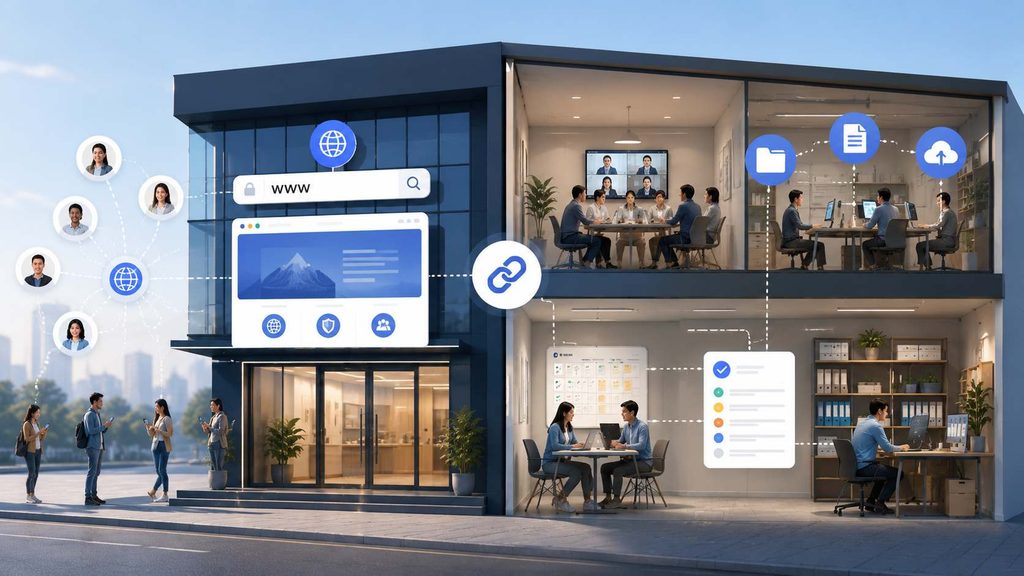
“Digital Front Door” & “Digital Office”: The Essential Infrastructure Duo for SMEs to Break Through
Digital front door and digital office are two fundamental foundations that a modern business should build from its early stages. One helps the business present itself professionally to customers, partners and the market. The other creates an environment for the team to communicate, collaborate and handle work within the business.
Many SMEs start investing in technology based on very specific needs, such as building a website, purchasing a domain name, setting up a business email or using an application for internal communication. These investments may seem small and fragmented, but when built properly from the beginning, they can become the foundation for a larger operating system later on.
On the other hand, if a business only chooses tools based on immediate needs and only starts standardizing when its scale increases, the cost of changing systems, migrating data and retraining the team can be much higher than building the right foundation from the start.
What Are SMEs Missing When They Only Have a Website or a Chat Group?
Having a website does not necessarily mean that a business has complete digital infrastructure. A website helps a business establish an online presence, but it primarily supports external activities. Meanwhile, internal operations can still remain highly manual.
Customer information is stored on Sales employees’ personal computers. Documents are sent through multiple chat groups. Employees communicate about work using personal accounts. Important files are stored in different places. When an employee leaves or changes departments, the business has to spend time finding information and handing it over.
This is a gap that is often overlooked when SMEs begin their digital transformation. The business has a digital front door but does not yet have a digital office.
On the other hand, a team may use multiple collaboration tools while customers cannot find an official website, a professional business email address or a centralized place for information about the business. In this case, internal operations may be relatively modern, but the external image does not match.
Therefore, the issue is not about how many tools a business needs. More importantly, it needs to build two fundamental foundations: a place for the business to present itself to the market and an environment for the team to work effectively internally.
Digital Front Door: The First Touchpoint Between a Business and the Market
In today’s business environment, customers often research a business before deciding to get in touch. They may search for the company name on Google, visit its website, look at service information or check how the business appears across online channels.
That is exactly the role of the digital front door.
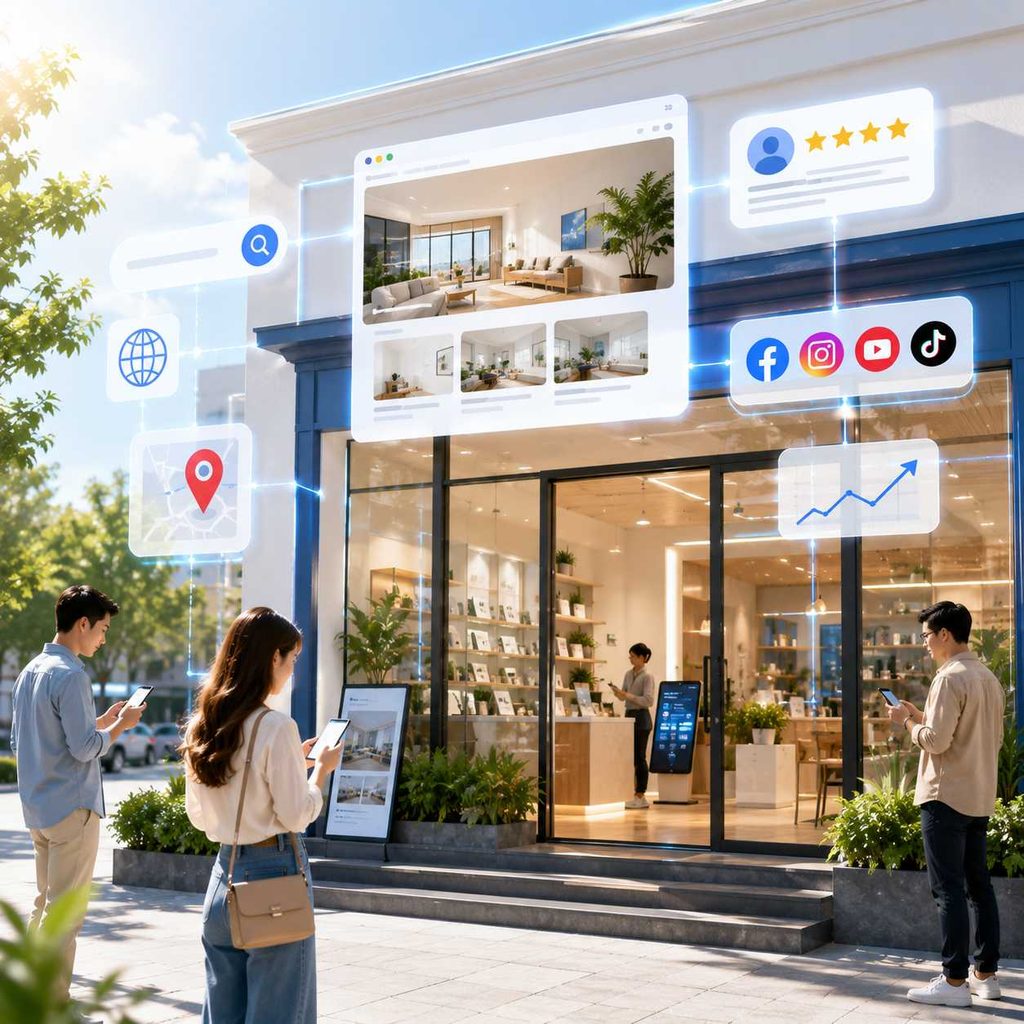
A business website, corporate domain, domain-based email and official information on the Internet create the initial image that a business presents to the market. For SMEs, this does not necessarily need to be a complex website system. What matters is having clear information, a professional image, easy discoverability and enough information for customers to understand what products or services the business provides.
A good website is not only there to “be on Google.” It is a point of credibility. When customers are referred to a business, being able to find an official platform with complete information creates a different level of trust compared with finding only a social media page or a personal phone number.
Especially for SMEs looking to expand their market, the digital front door needs to be built early. As the brand begins to grow, the website and other digital assets will become the foundation for the business to continue implementing marketing activities, attracting customers and building a long-term brand.
Digital Office: Turning Fragmented Work Practices into a System
If the digital front door is where the business appears to customers, the digital office is the team’s workspace in the digital environment.
A digital office is not simply about adding another chat application. It is about how a business organizes communication, documents, schedules, meetings and collaboration within a structured environment. Modern collaboration platforms such as Lark are designed to connect multiple work activities within a single environment, helping teams reduce their dependence on fragmented tools.
When properly organized, employees can know where information is stored, which document is the latest version, who is responsible for a task and what needs to be handled next. Managers also have a basis for tracking progress instead of constantly having to ask individual employees.
What is worth noting is that a digital office does not only serve a business once the team has grown. The earlier an SME builds this foundation, the easier it becomes to maintain consistent ways of working as the business scales.
A five-person business may still be able to manage through a chat group. But when the team grows to several dozen people, while the number of projects, customers and documents also increases, this way of working starts to create hidden costs. The time spent searching for information, reconfirming tasks and handling missed information are all operating costs that are not easy to see in financial reports.

Why Should SMEs Invest in These Two Foundations from the Start?
The most important point is not to invest heavily in technology as soon as the business is established. SMEs often have limited resources, so they need to choose foundations that can be used over the long term and expanded as their needs grow.
Digital front door and digital office serve two different needs but complement each other. The digital front door helps the business build its presence and create touchpoints with the market. The digital office helps the business create a consistent working environment so the team can operate behind that presence.
When these two foundations are built early, the business can also avoid a common problem: having to completely change the way it works when growth begins.
For example, an SME can start with a basic website, reliable hosting and a business email system. At the same time, the team can use a suitable collaboration platform to manage communication, documents and work. As the business grows, these platforms can continue to be expanded or connected with other systems such as CRM, accounting, sales or operational management systems.
Therefore, investing in technology early does not mean buying a large number of software solutions. It means building the right foundation so that future investments do not have to start again from zero.
Good Digital Infrastructure Does Not Need to Be Large, but It Needs to Be Right
One of the mistakes SMEs make when starting their digital transformation is thinking that they need a very large system before it can be considered digital transformation. In reality, a business can start with very basic foundations that directly influence how the business presents itself and operates.
A professional website can be the first step toward a digital front door. A centralized collaboration system can be the first step toward a digital office. Then, as needs arise, the business can continue adding a CRM to manage customers, a financial management system to control cash flow or more specialized solutions for each department.
This approach helps SMEs control their budgets better and, more importantly, allows technology to grow with the business instead of becoming a burden that needs to be managed.
For WBLGroup, when advising SMEs on digital infrastructure, the priority is not to introduce as many tools as possible from the beginning. What needs to be determined first is what stage the business is at, which problems need to be solved and which foundations can create immediate value while still being capable of supporting the next stage of growth.
A business that wants to grow in the digital environment needs both a professional enough front door for the market to see it and an efficient enough office for the team behind it to operate. Investing in these two foundations early is how SMEs build a foundation for growth without having to chase technology once the business has already become too large.