










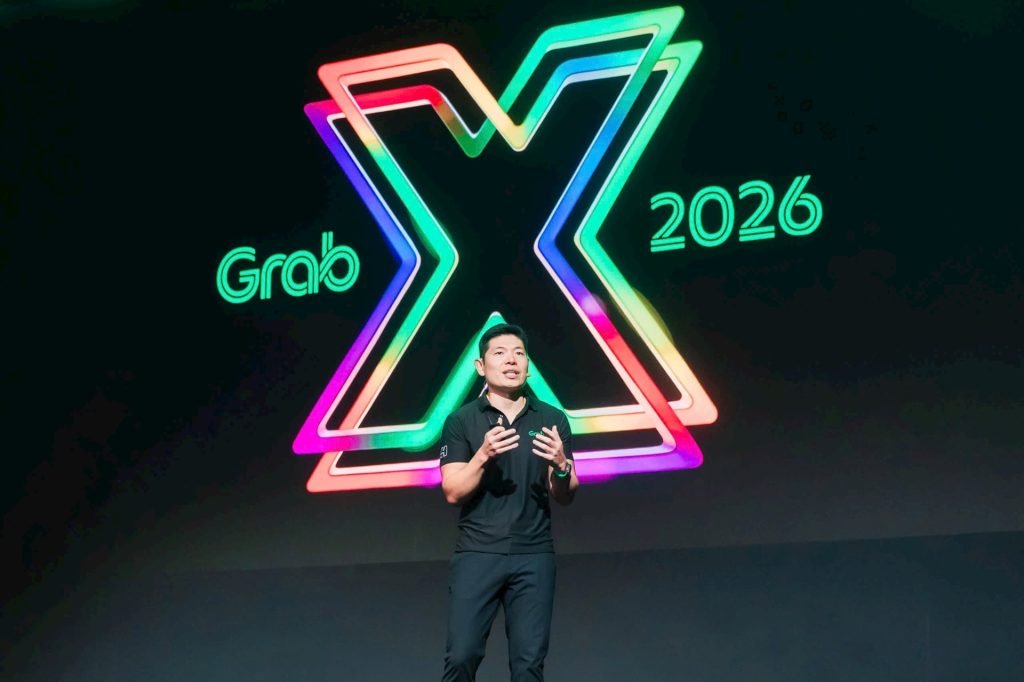
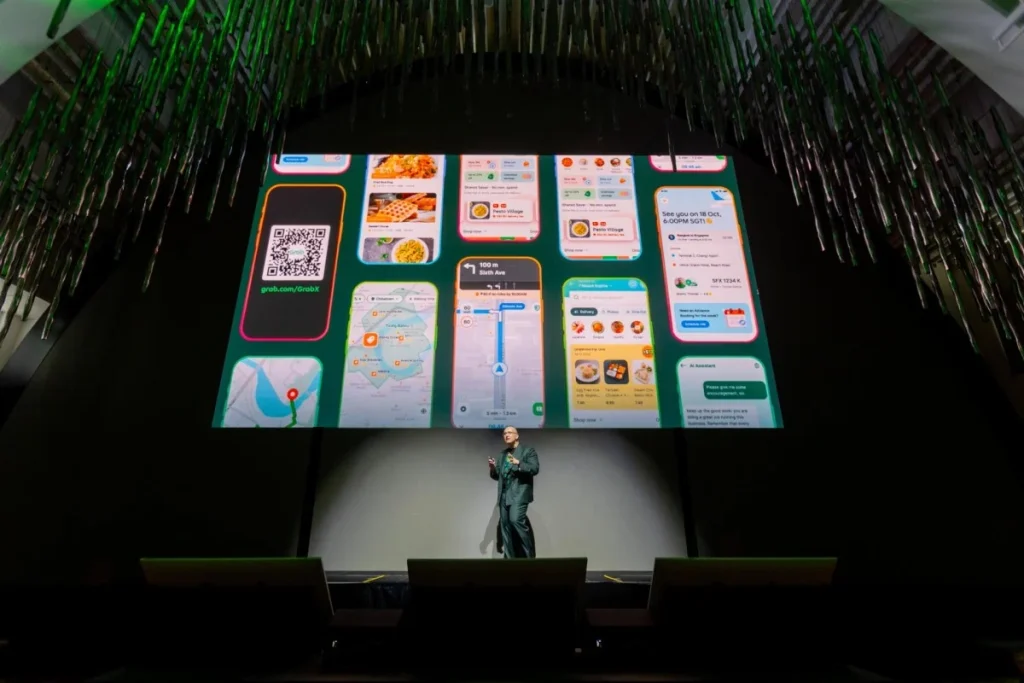
During GrabX 2026 in April 2026, Grab unveiled a series of major updates, including eight notable features centered on AI, personalization, and user experience optimization. At first glance, this appears to be another product story; adding new features, improving the user experience, and expanding services. However, from the perspective of a Business Analyst or a consulting firm like WBL Consulting Group, the real story lies elsewhere: operations. The most valuable lesson is not what new features Grab introduced, but how the company continues to expand and innovate without making its system more complex or difficult to manage.
Businesses Don’t Lack Features. They Lack a System to Operate Features.
When businesses look at Grab’s latest updates, the common reaction is to imitate them by adopting AI, building new apps, or personalizing customer experiences.
But the real challenge has never been about coming up with new ideas.
The real question is why some companies can continuously launch new capabilities while maintaining operational stability, whereas many businesses add one new feature only to create another layer of operational complexity.
The difference is not in the ideas themselves.
The difference lies in how the system was designed from the beginning. One company builds on a structured operational foundation, while another keeps patching new requirements onto an increasingly fragmented system.
Looking at the 8 New Features Through an Operations Perspective
If you carefully examine Grab’s announcements, you’ll notice that they did not release eight isolated features. Instead, they expanded an operational system that had already been designed beforehand. Each feature is simply a new layer built on top, while the operational architecture underneath remains consistent across the entire platform.
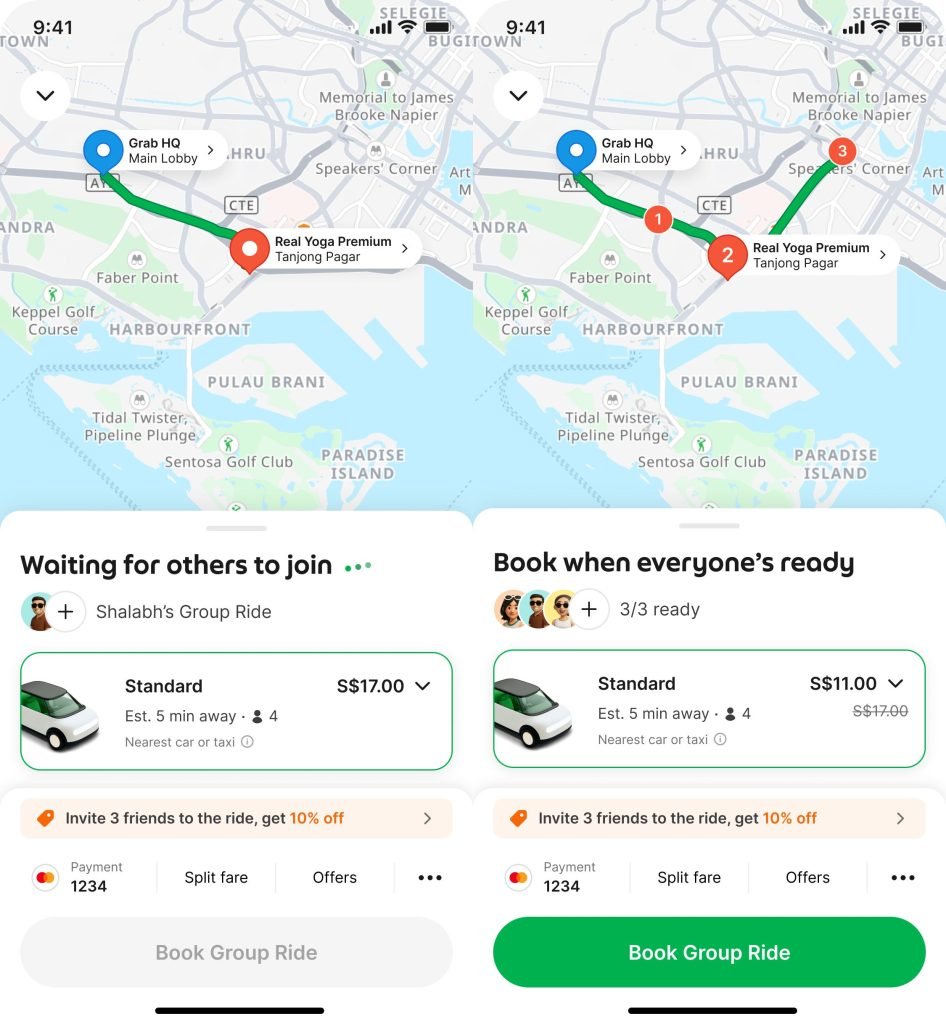
Group Rides: Standardizing an Existing Behavior
At first glance, Group Rides simply allows multiple people to share the same trip. In reality, it represents a complex operational challenge. The system must match passengers with similar routes, distribute costs fairly, and optimize travel paths without compromising each individual’s experience. This is not merely adding a feature. It is the process of transforming a real-world behavior into a standardized workflow that can scale efficiently.
Airport Ride Booking: Planning Operations Instead of Reacting
The airport ride scheduling feature is far more than a convenience. It represents an operational planning capability. Instead of reacting only to immediate requests, the system must manage future demand by allocating drivers, calculating travel times, and anticipating variables such as traffic congestion or schedule changes. This demonstrates the evolution from real-time operations toward predictive operations.
Grab AI Assistant: Not a Chatbot, But the Interface of the Entire System
Grab AI Assistant is often misunderstood as a chatbot. In reality, it is an interface layer sitting on top of the entire operational system. When a user submits a simple request, multiple systems work together behind the scenes to understand the context, determine the user’s location, select the appropriate service, calculate timing, and recommend additional options. Without an integrated backend, AI cannot function as intended.
Voucher Map: A Real-Time Data Challenge
Voucher Map clearly demonstrates how even a small feature depends heavily on operational capabilities. Displaying promotions based on location is not simply a UI feature. It requires the coordination of real-time location data, merchant systems, campaign logic, and promotion availability. If the data is not synchronized, users may see offers that cannot actually be redeemed. If the system is not operating in real time, the entire customer experience becomes inaccurate.
Grab More: Parallel Processing Capability
Grab More allows users to book multiple services simultaneously, but its real significance lies in the platform’s ability to process multiple workflows in parallel. In many businesses, systems are designed to process transactions sequentially, with one customer, one order, and one workflow at a time. As transaction volume increases, these systems eventually become bottlenecks. Grab, however, was designed from the beginning to process multiple workflows simultaneously. As a result, the platform can scale without breaking its operational architecture.
Trợ lý AI cho tài xế: tối ưu toàn bộ chuỗi vận hành
Trợ lý AI cho tài xế cho thấy một cách tiếp cận khác trong tối ưu vận hành. Không chỉ tối ưu phía khách hàng, Grab còn tối ưu phía đối tác. Tài xế được hỗ trợ lộ trình, gợi ý chuyến đi và phân bổ thời gian hiệu quả hơn. Điều này giúp nâng hiệu suất của toàn hệ thống, không chỉ một điểm chạm riêng lẻ.
Grab Shopping Agent: AI Participates in Purchasing Decisions
Grab Shopping Agent is more than a product search tool. It represents the transition from customers making purchasing decisions entirely on their own to the system actively participating in that decision-making process. AI not only displays products but also understands customer needs, recommends suitable options, and shortens the buying journey. This is only possible because customer behavior data, merchant systems, and the operational platform are tightly connected, allowing AI to function as an intelligent intermediary.
Personalised Travel Experience: Personalization at the System Level
A personalized travel experience goes far beyond itinerary recommendations. It connects user behavior, preferences, and service history to create one seamless journey for each customer. When the system is fully integrated, the customer experience is no longer a collection of separate services. Instead, it becomes one continuous journey spanning transportation, dining, shopping, and every interaction in between. At this stage, personalization is no longer created at individual touchpoints. It is built into the entire operational system.
Key Insight: Grab Doesn’t Build Features. They Build Systems.
Looking at everything Grab has introduced, one thing becomes immediately clear. None of the new features exists independently. Every new capability is simply an extension of an operational system that was already designed in advance. Behind every feature are three core operational layers.
The first layer is data, where all user information, behavioral data, and transactions are centralized and standardized.
The second layer is the system, where operations, payments, partners, and services are connected into one continuous workflow.
The final layer is automation and AI, where standardized data and connected systems are leveraged to optimize operations and personalize customer experiences.
The important point is that AI is not the starting point. It is the final layer. Without strong data and system foundations underneath, AI creates very little real business value.
A Common Mistake Businesses Make When Looking at Companies Like Grab
Most businesses move in the opposite direction. They begin with tools. They implement CRM before defining their business processes. They adopt AI while their data remains fragmented. They build mobile applications before integrating their existing systems. In the short term, everything may still function. Over time, however, every new tool becomes another isolated silo, and every department begins operating according to its own logic. The result is a business that becomes increasingly complex without becoming more efficient. At that point, the real problem is no longer the lack of technology. The problem is that the organization was never designed to operate as one connected system.
Why Grab Can Continuously Launch New Features
The answer is not that Grab has more software developers. Its lies in an operational architecture that was standardized long before these new features were introduced. When the foundation is strong, every new feature becomes an extension of the existing platform. There is no need to rebuild the system from scratch or disrupt ongoing operations. This is the fundamental difference between a business built on systems and one that operates through disconnected projects. One expands by leveraging an existing foundation. The other must almost start over every time it wants to introduce change.
WBL Consulting Group’s Perspective
The most valuable lesson businesses should learn from Grab is not how the company applies AI, but how it built an operational foundation strong enough for any technology to create value. A well-designed system always follows the same logical sequence. It begins with understanding the current operational landscape, then standardizing business processes, consolidating data into a single source of truth, and connecting systems across the organization. Only after these foundations are in place should automation and AI be introduced. When this sequence is reversed, businesses may still implement new technologies, but costs tend to rise faster than the value they generate, while the overall system becomes increasingly difficult to manage.
Grab is gradually transforming itself from a multi-service application into an operating system for everyday life, where every experience is connected and personalized in real time. What makes this transformation possible is not the number of features it offers, but the operational system behind them, which has been designed to scale without adding unnecessary complexity. For businesses, the most important question is therefore not whether they should adopt AI, but whether their current operational system is sufficiently structured, connected, and scalable. Without that foundation, every new feature becomes only a temporary solution that will eventually create another operational challenge.
If your organization is reviewing its current operations or considering digital transformation but isn’t sure where to begin, the approach itself may need to change. At WBL Consulting Group, we do not start with software. We begin by analyzing your existing operational system, redesigning the appropriate business architecture, and selecting technology that supports the business rather than driving it. Our ultimate goal is not simply to deploy more tools, but to build a business system that is structured, measurable, scalable, and ready for long-term growth.