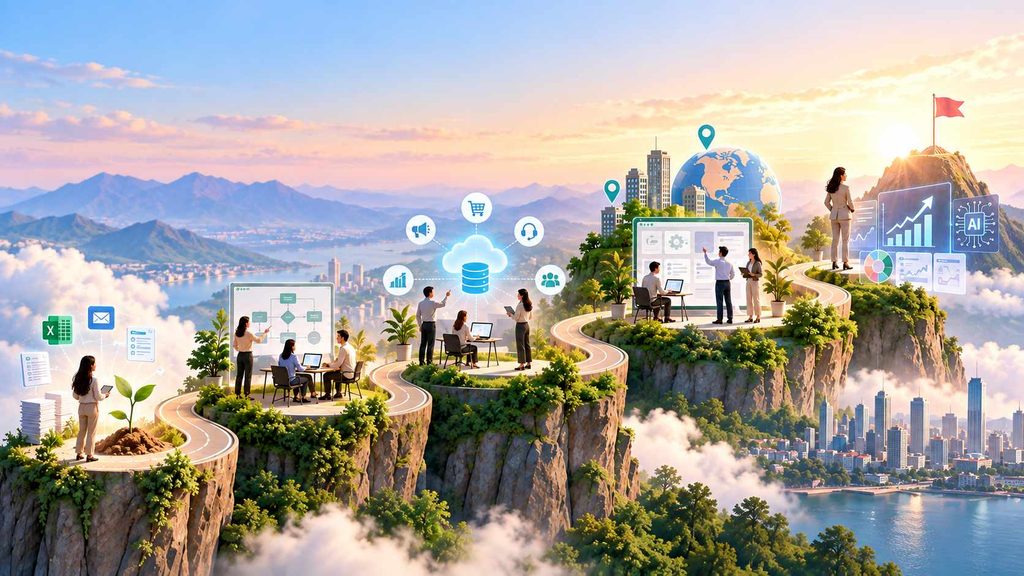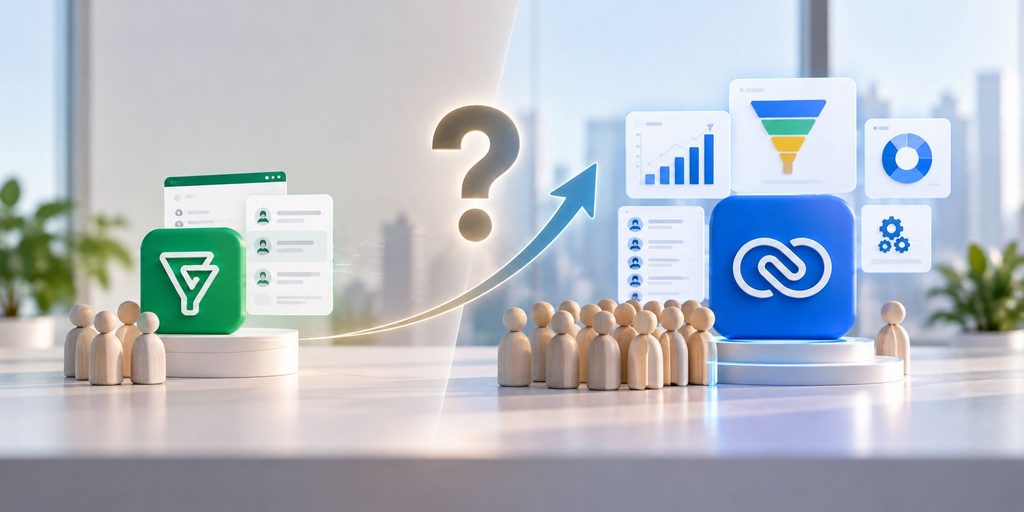









Moving from CRM to ERP is not about replacing one piece of software with a larger system. It is a change in the scope of the management challenge as the business continues to grow.
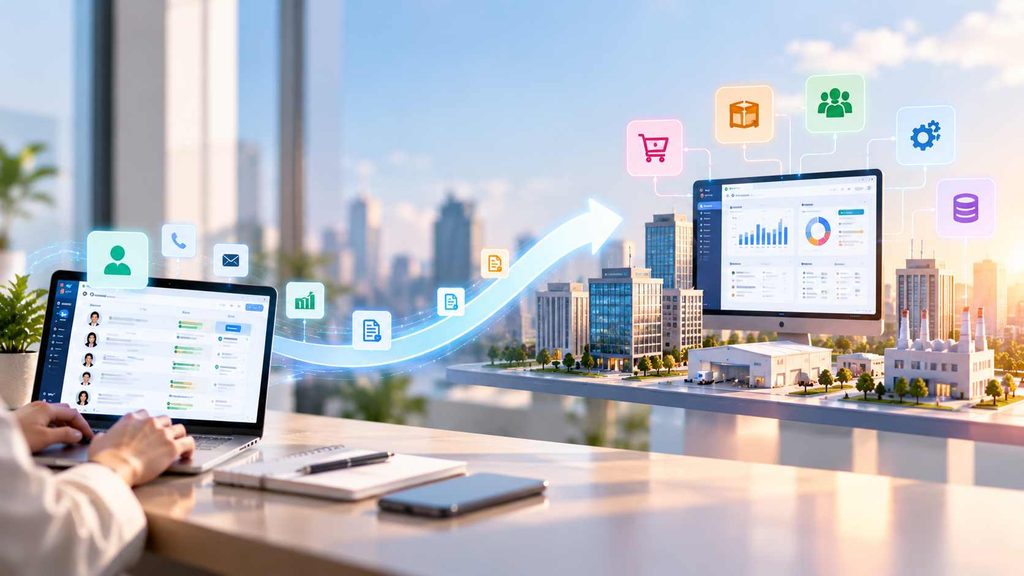
From Managing Customers to Managing the Entire Sales Process
From CRM to ERP often begins with a very practical need: the business wants to have better control over customers and Sales activities.
When Leads are managed in Excel, information is stored in Emails or each employee tracks customers in a different way, it becomes very difficult for the business to know exactly which opportunities are being handled, what stage a customer is at and what Sales needs to do next.
CRM solves this layer of the problem by bringing customer Data, Leads, opportunities and Pipeline into one centralized system. Odoo CRM also focuses on managing Leads, opportunities, Pipeline, next activities and Sales performance analysis.
At this stage, CRM has already created an important change: Sales no longer manages customers individually, but starts working according to a common process.
But when a Deal is closed, the story does not end there.
When an Order Starts Involving Multiple Departments
Consider a very familiar situation:
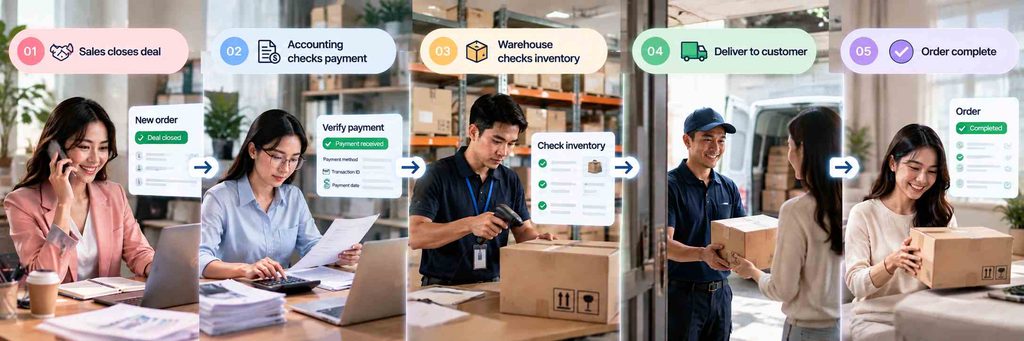
At this point, customer information no longer belongs only to Sales. Accounting needs to know the order value and payment status. The Warehouse needs to know the products and quantities. The Delivery team needs to know which orders are ready.
If each department continues using a separate file or software, employees have to constantly ask one another, send information and re-enter Data. A business may have a lot of Data but still spend time simply trying to find out where an order is.
This is where the technology challenge begins to change. The business no longer only needs to manage customers, but needs to connect the entire workflow behind the customer.
ERP Appears When the Management Challenge Goes Beyond Sales
This is when the concept of ERP becomes worth considering.
While CRM focuses strongly on customers and Sales, ERP expands the scope to other activities such as Sales, Accounting, Inventory, Purchasing, Manufacturing and operational processes. The important point is not only the number of functions, but the ability to connect Data between departments.
Odoo follows this direction by building an integrated application ecosystem that brings together CRM, Sales, Accounting, Inventory, Purchasing, Manufacturing and many other business operations on the same platform.
For example, information from an order can be connected to Inventory, invoices and Delivery instead of being manually transferred between multiple systems. Odoo also describes end to end Data synchronization and connecting departments across the business as a key part of the platform.
Therefore, ERP is not simply a “larger version of CRM”. ERP changes the scope of management: from one department or one process to multiple activities that are connected to one another.
Not Every Business Needs ERP Immediately
An important point in digital transformation strategy is that a larger business does not necessarily mean it needs a larger system.
If the business is currently facing problems with Leads, customers and Pipeline, CRM may still be the appropriate solution. There is no need to introduce additional complex systems when the current business challenge does not require them.
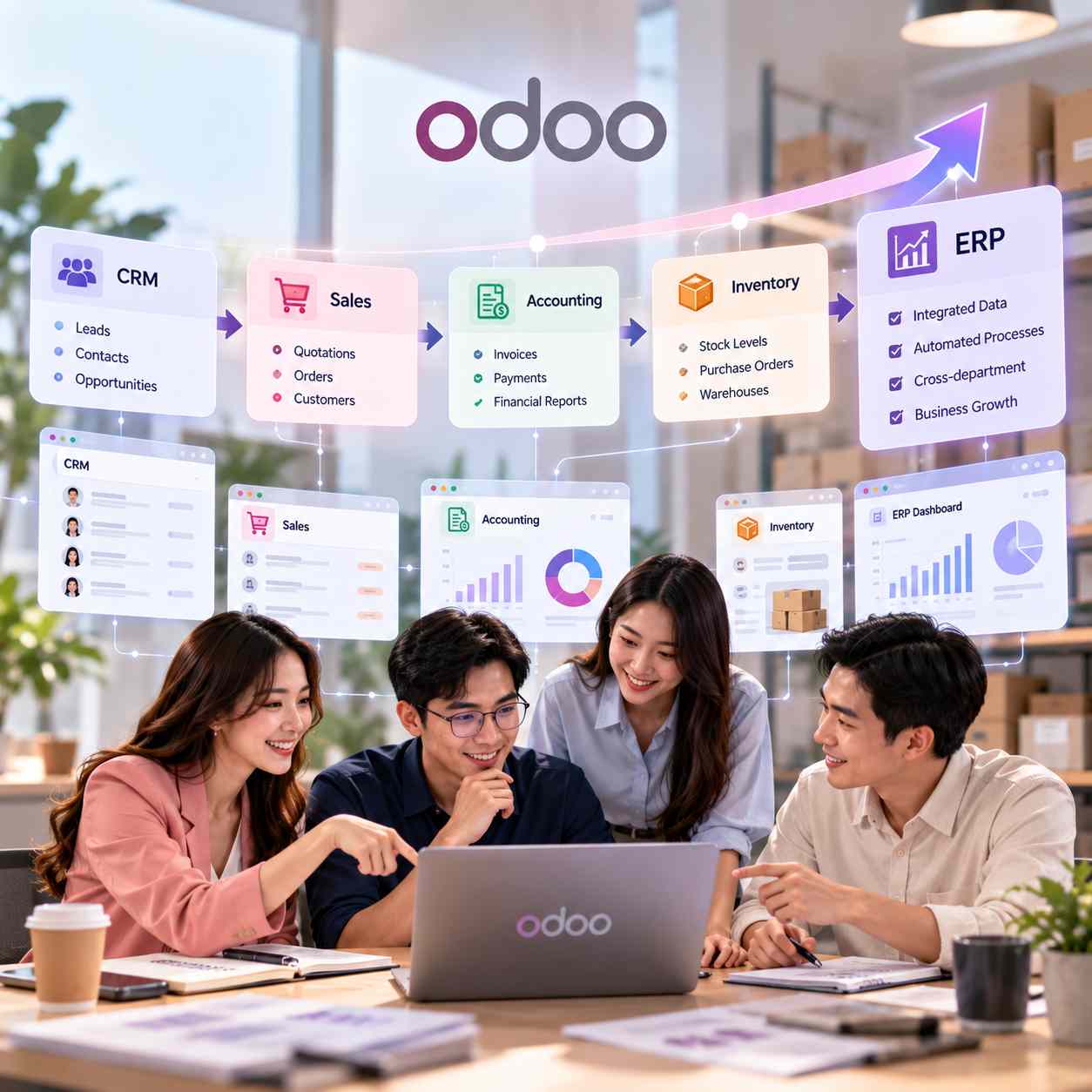
But if Sales has already closed an order while Accounting still has to ask for the information again, the Warehouse does not know which orders need to be processed, Inventory Data has to be updated manually or departments constantly have to communicate to complete a transaction, then the problem has gone beyond the scope of CRM.
At this point, the question should shift from “What software does the business need?” to “Which processes are breaking down and which departments need to be connected?”
That is the strategic way to look at From CRM to ERP.
A business can start with CRM, expand into Sales, connect with Accounting and Inventory, and then gradually build a broader management system when the actual need emerges. With Odoo, the integrated application model allows businesses to approach it this way instead of having to solve every business challenge at the same time.
From CRM to ERP, therefore, is not a technology race. It is a process in which the management system develops along with the way the business itself develops.
When Data no longer stays only within Sales but starts moving across the entire flow of customer → order → payment → Inventory → Delivery → Operations, the business also needs a broader view of its technology system.
This is the foundation for WBLGroup to explore Odoo and business management challenges in greater depth throughout the upcoming content series.